
Sedimentary Urbanism
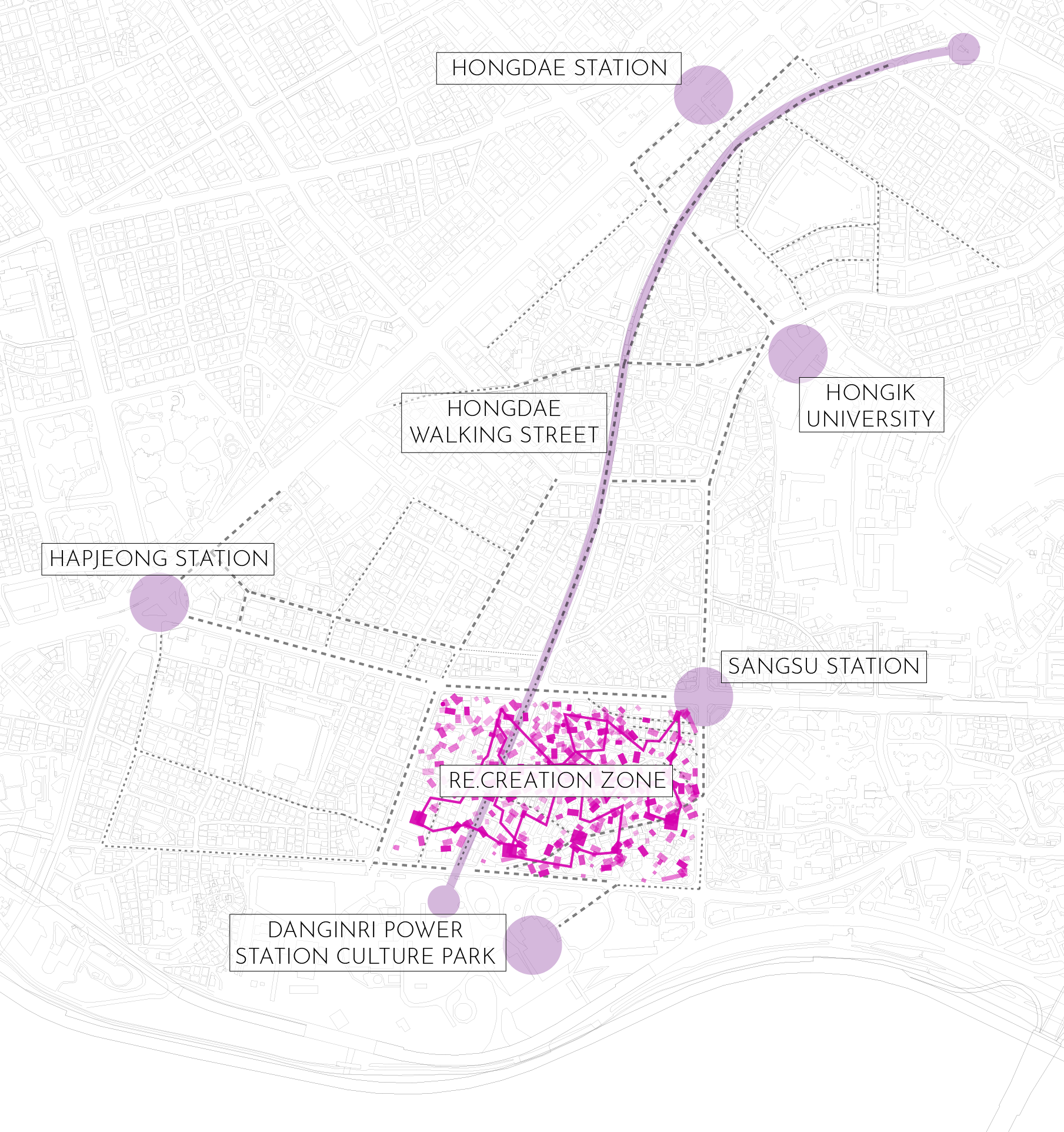
The Hongdae Re.Creation Zone
2019
Hongdae, Seoul
Unbuilt Concept, Master Plan
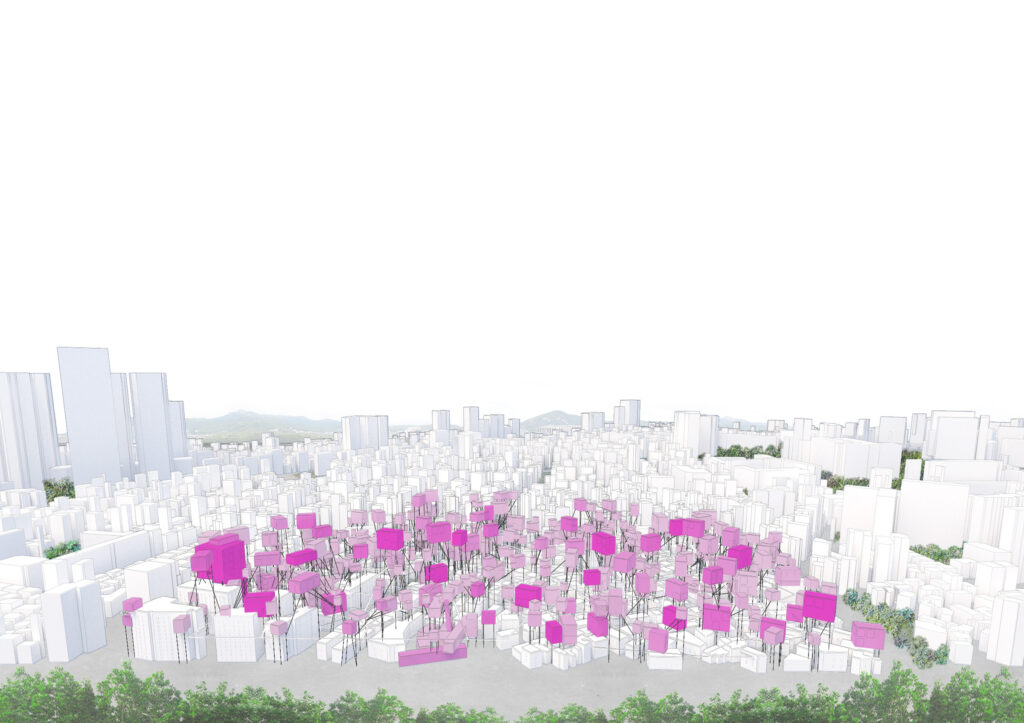
The Hongdae Re.Creation Zone reimagines how dense urban neighborhoods can grow. Instead of the wholesale demolition typical of Korean redevelopment, this proposal introduces a framework for incremental densification. By treating urban complexity as an asset rather than a problem to solve, the proposal offers a model for growth that preserves the spatial and social fabric that makes neighborhoods vital.
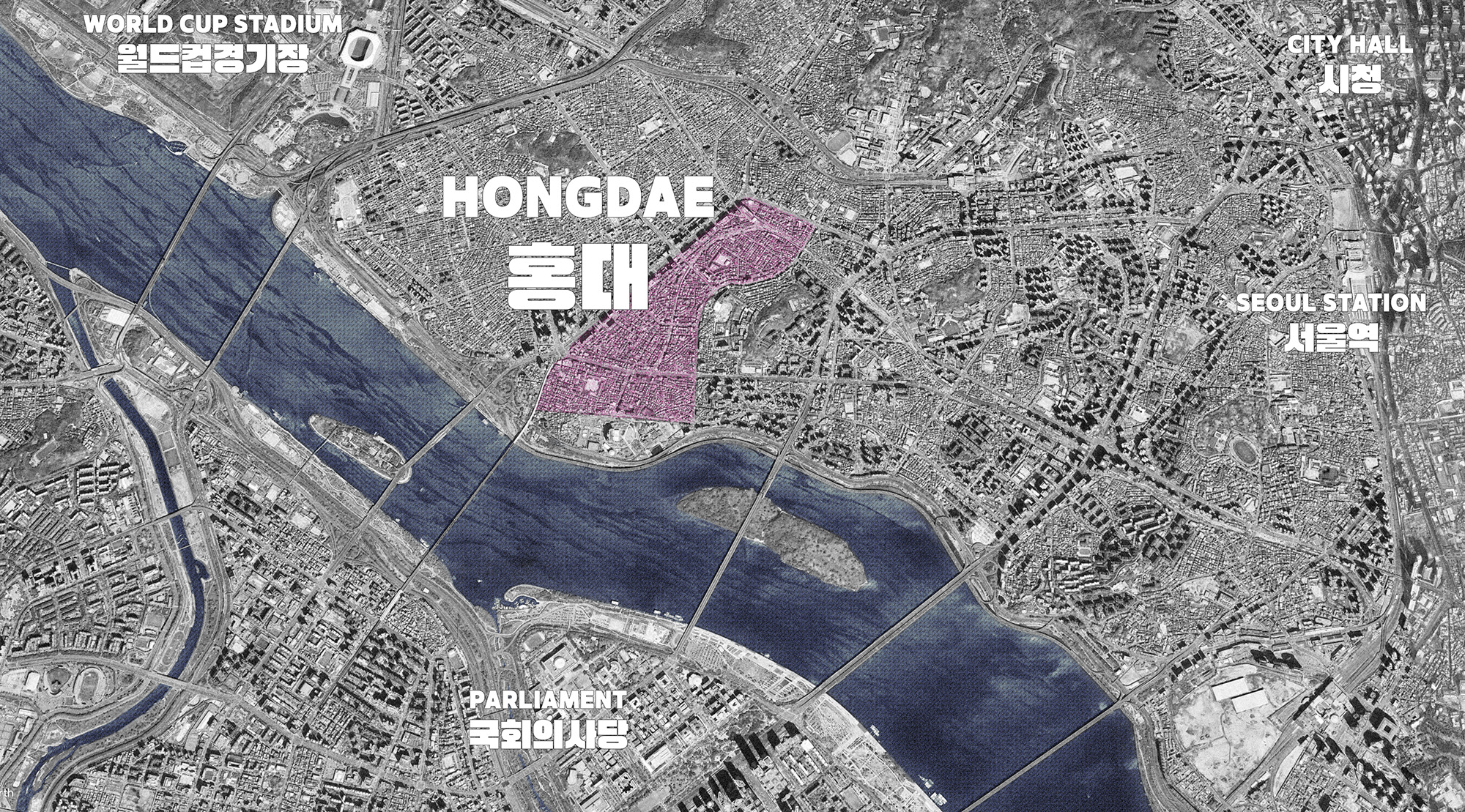
In Hongdae, the built environment changes rapidly due to commercialization, gentrification, and government-led beautification projects. Structurally, many buildings have been expanded, repurposed and rebranded, but show clear signs of their past. Socially, the neighborhood is a hive of activity. The narrow street grid, irregular floor heights, and “extra-legal” additions all create an urbanism of continuous discovery and give Hongdae its distinct charm.
Korean redevelopment typically erases this richness, replacing low-rise neighborhoods with uniform apartment towers. The Re.Creation Zone offers a third path between stagnation and obliteration.
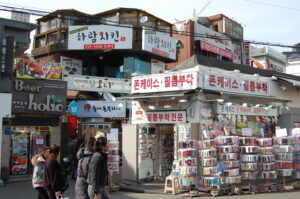
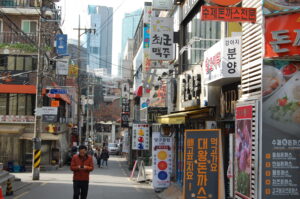
Hongdae
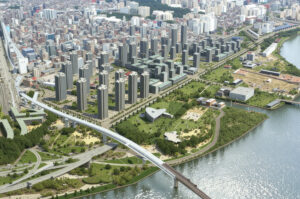
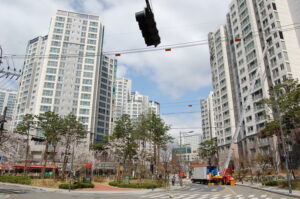
Apartments
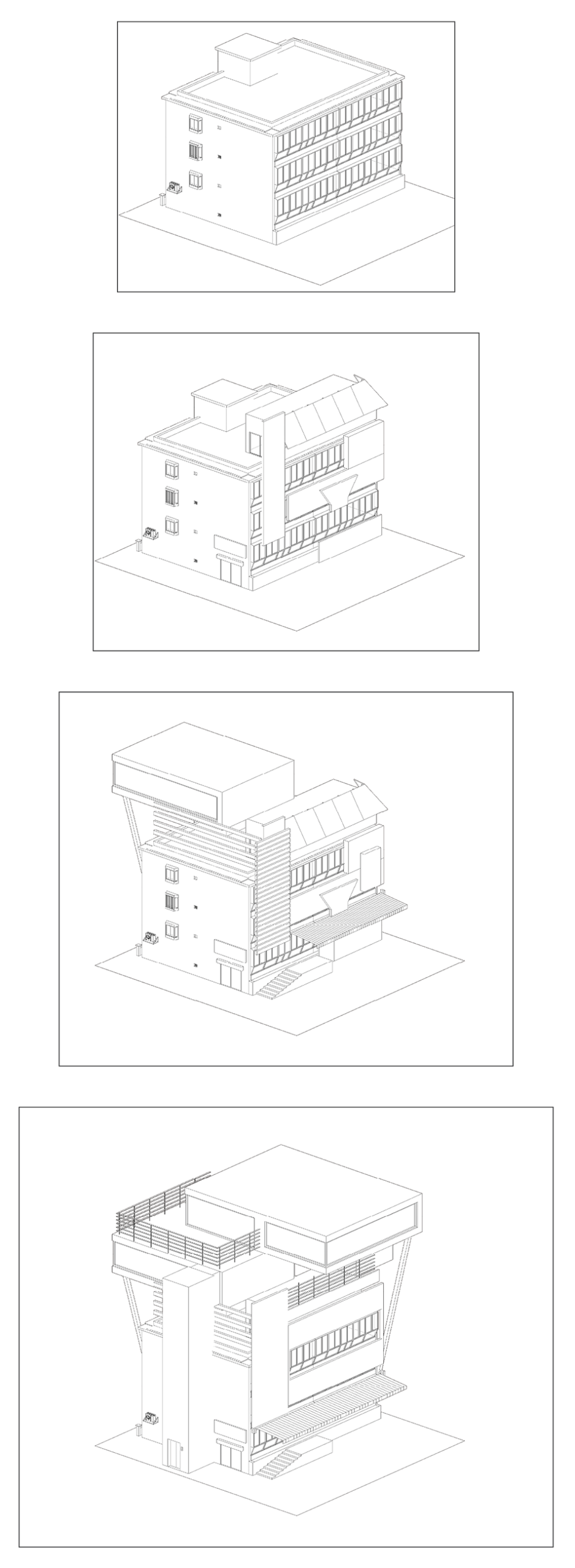
Re.Creation is an experimental Special Development Zone where density limits increase gradually over time, rather than all at once. This small change allows property owners to add space around and above existing buildings, and disincentivizes demolition. Small-scale additions and commercial conversions become economically viable, and neighborhoods grow without displacement and gentrification.
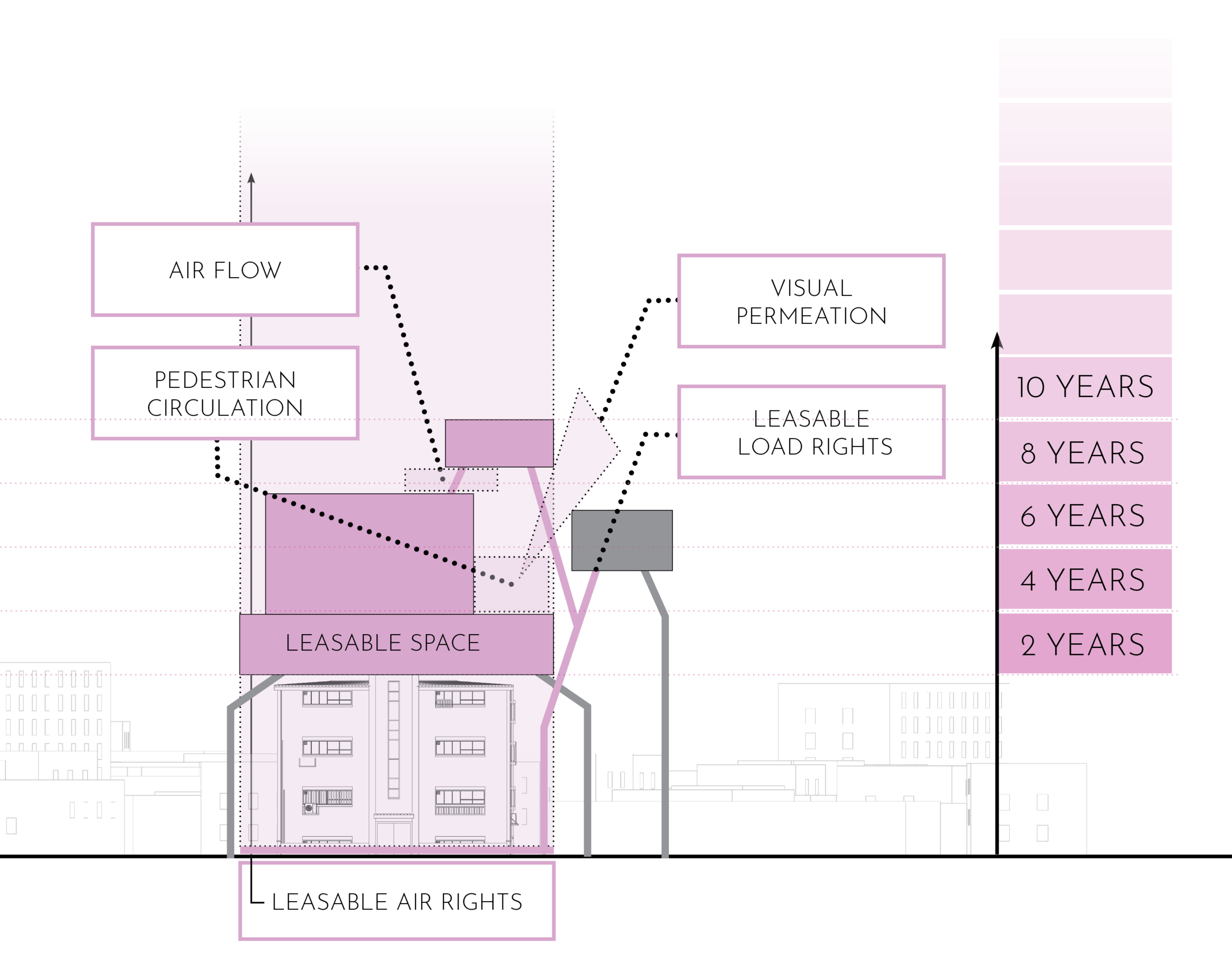
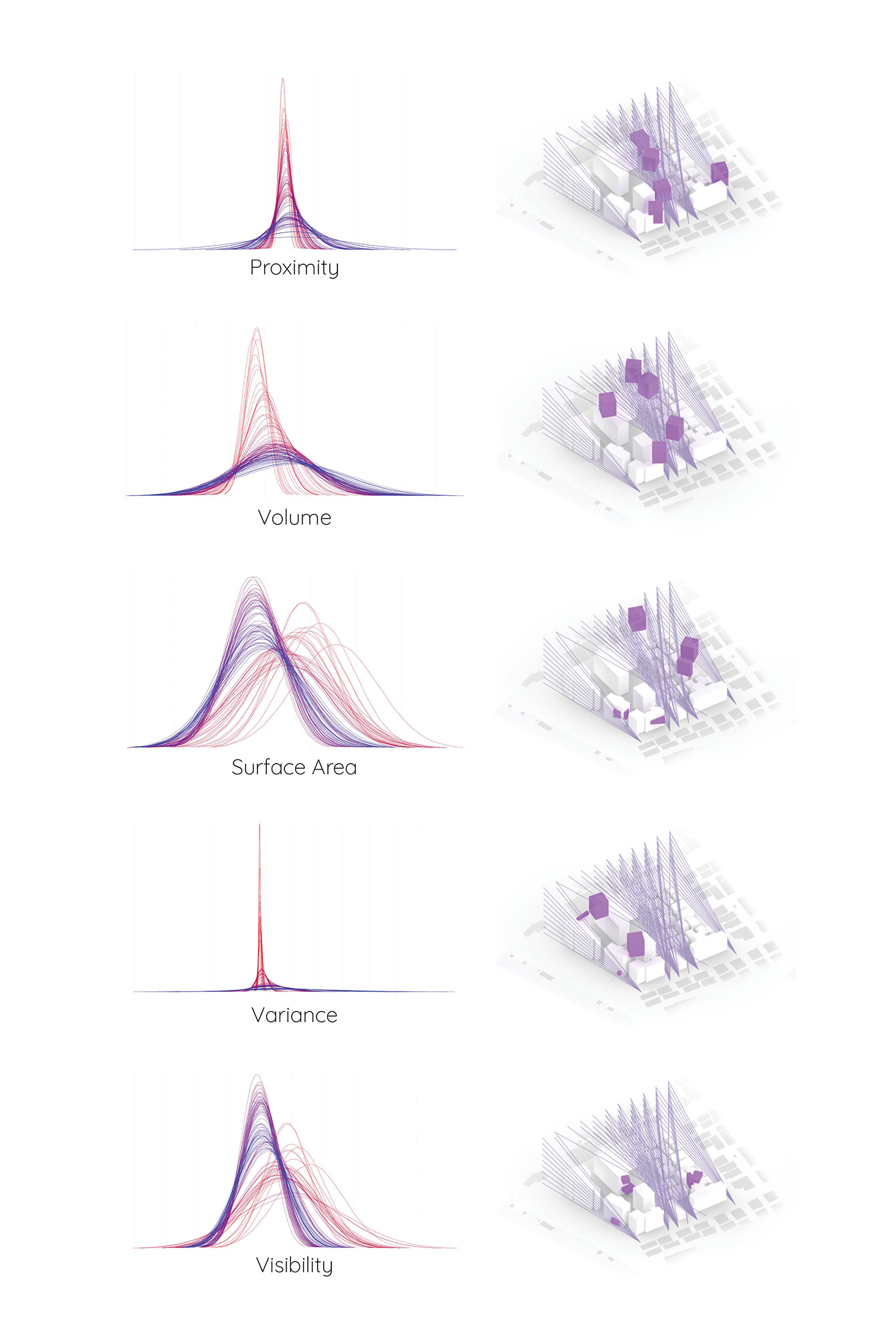
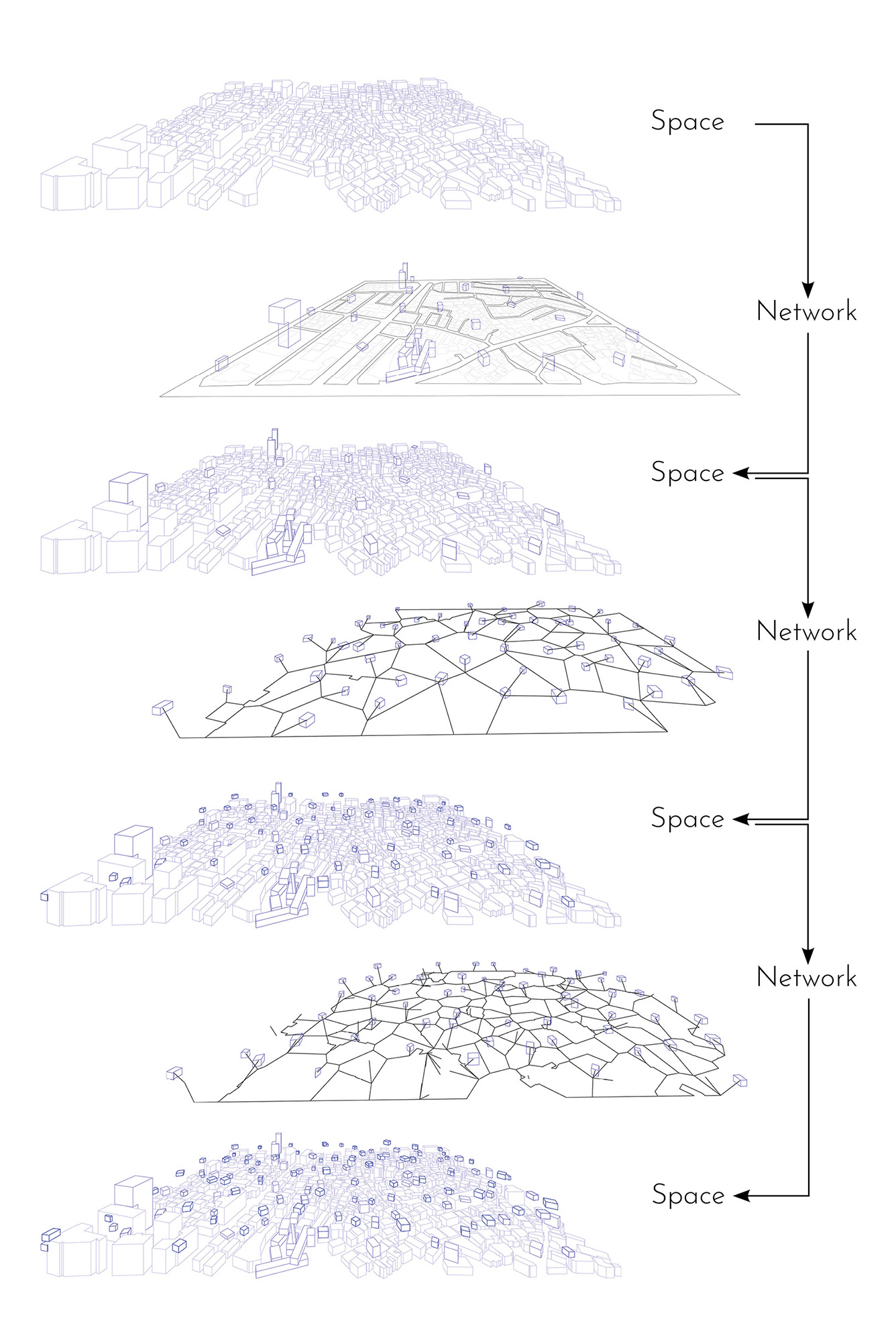
This planning complexity is made possible with parametric design and analysis tools. Evolutionary algorithms can evaluate proposed additions against spatial criteria: daylighting, air circulation, infrastructure, pedestrian access, and structural feasibility. Stakeholders work within a decentralized planning system that rewards continuous adaptation rather than speculation. Buildings that evolve gain value and public infrastructure adapts to demand.
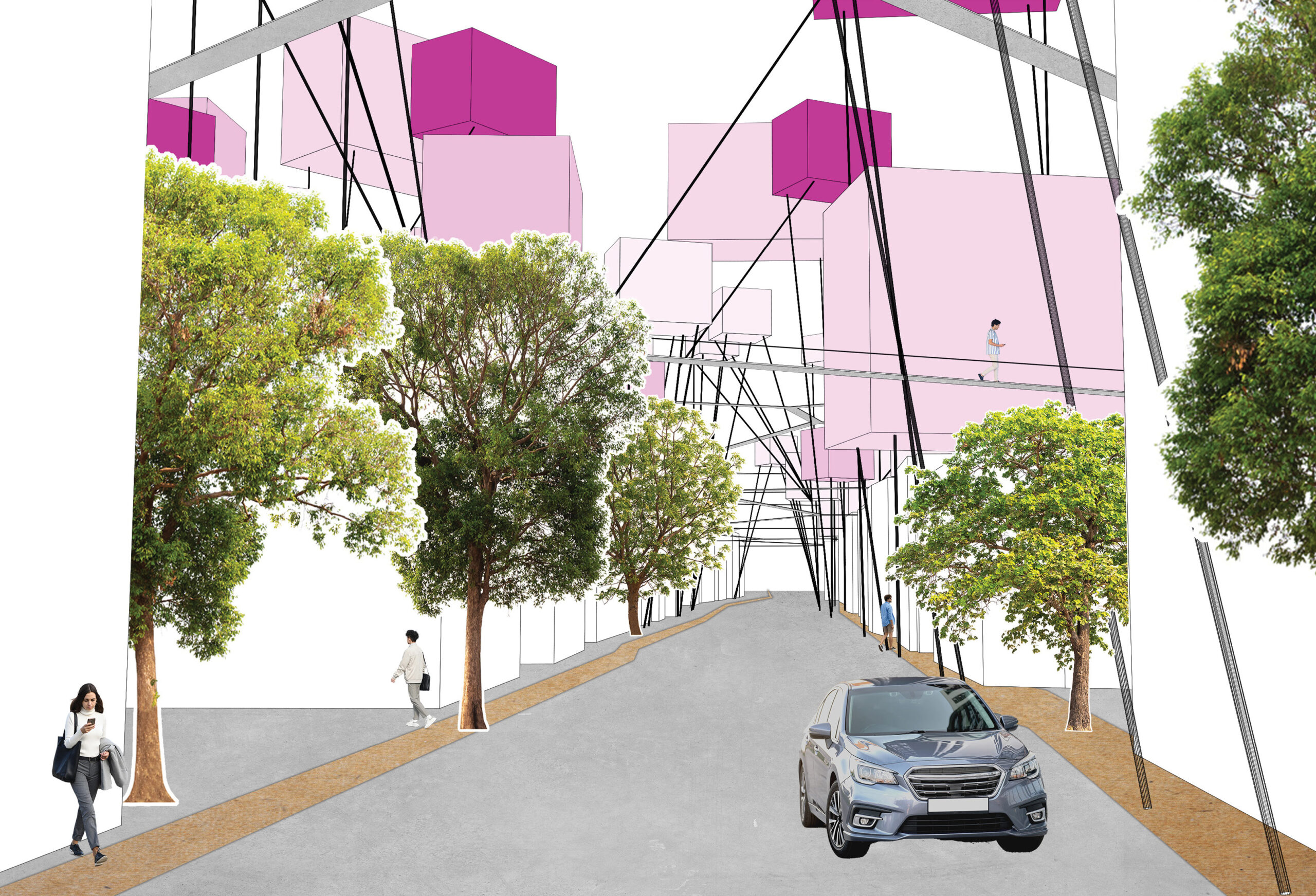
To test this framework, one potential phase of development was initiated. As buildings grew upward across property lines, load-bearing beams became prominent architectural elements, creating a visible structural language while allowing flexible space above. Circulation expanded into three dimensions. Pedestrian bridges connected upper levels, stairs wove between buildings, and the street grid expanded vertically, creating multiple layers of public passage. Rooftops became plazas, and gaps between structures provided light, air, and views.
The Re.Creation Zone aims to establish a recreation (leisure) zone for Hongdae’s vibrant youth culture through a continuous recreation (creating anew) of spatial organization, land use, and urban aesthetics. Rather than treating complexity as inadequate planning, the framework recognizes layered environments as valuable in themselves. The visual richness of accumulated façades, the spatial discovery of irregular circulation, the social mixing of varied commercial scales – these emerge from incremental change, not comprehensive design.
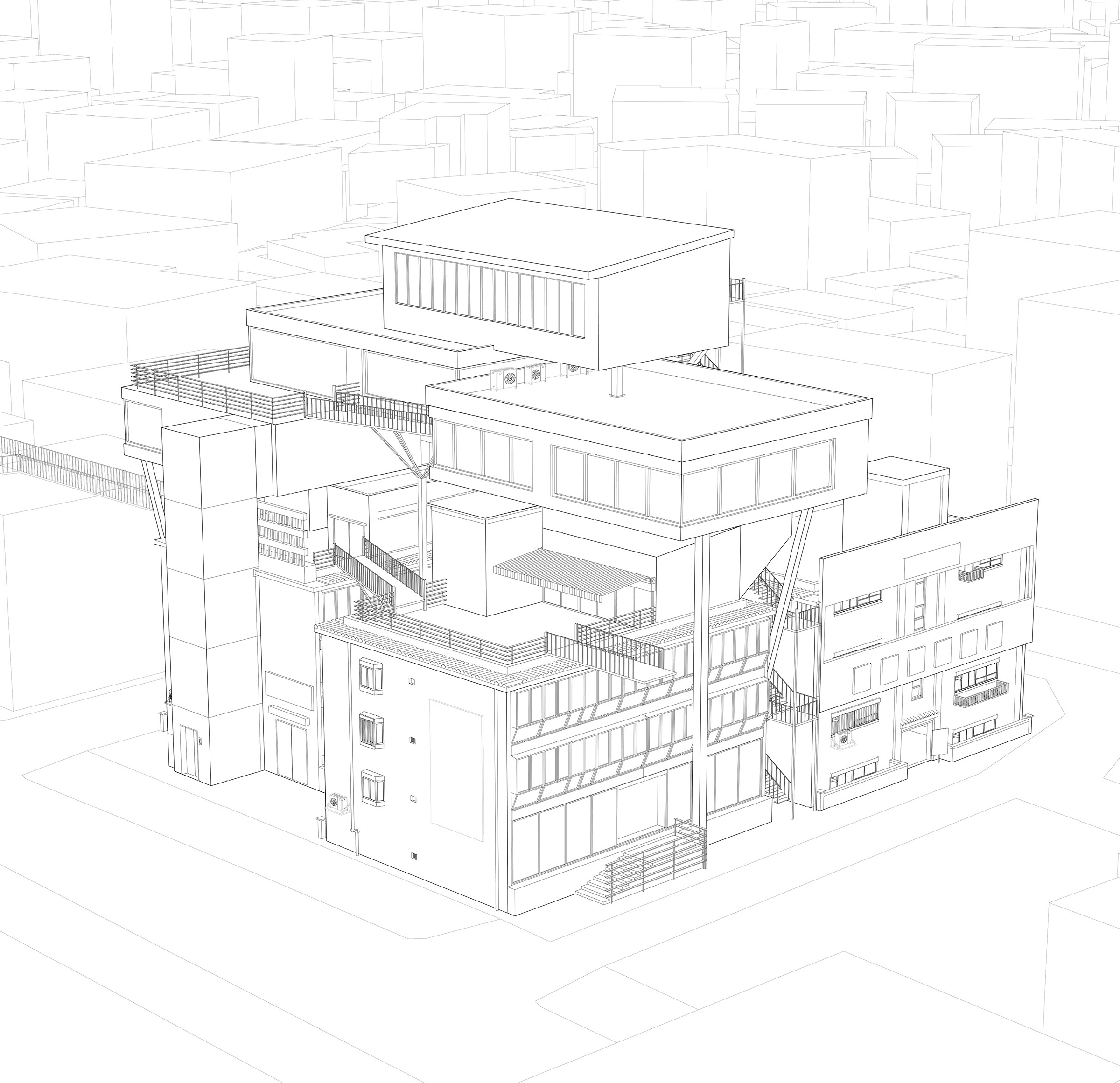
The Re.Creation model embraces messiness as the seed of vitality. Buildings will be irregular. Less controlled. But perhaps more capable of sustaining the vitality that comes from layered evolution rather than instant replacement.
This requires rethinking what planning does: not imposing comprehensive order, but establishing criteria for incremental decisions. Not maximizing immediate capital returns, but enabling continuous adaptation. Not treating existing fabric as an obstacle, but as a foundation.