
Perpetual Wandering
Gaden Sandrupling
Tibetan Buddhist Monastery
2009
Colerain Township, Ohio
Religious Structure
Unbuilt Concept
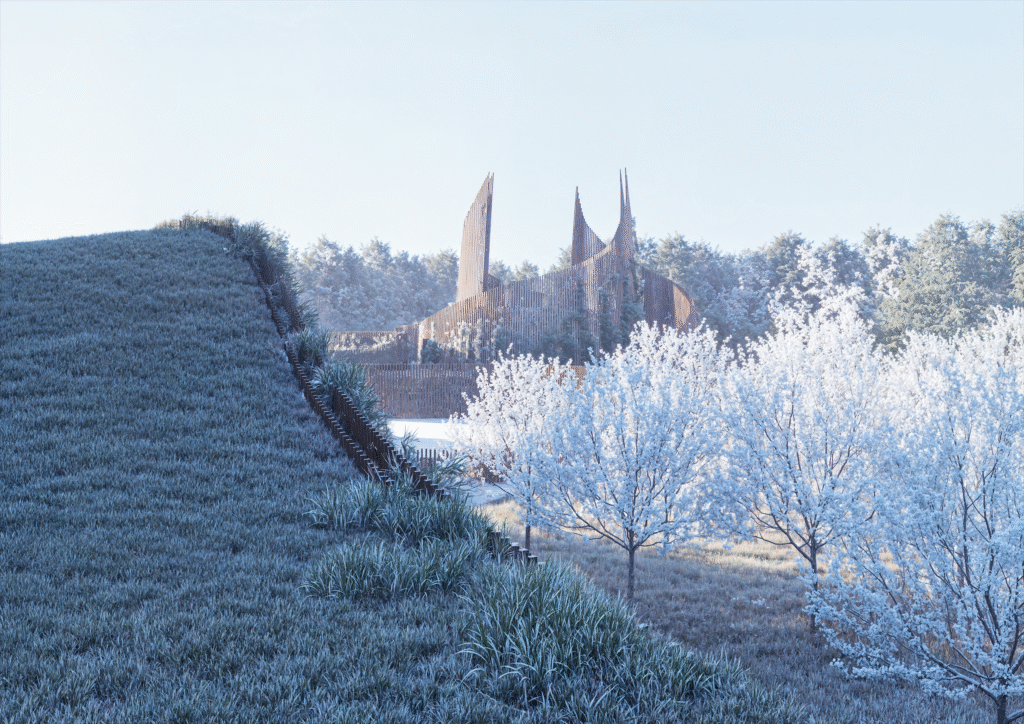

Tibetan Buddhism describes all sentient life as contained in a cycle of birth and rebirth. It is a cycle that defines life on earth while simultaneously erasing life’s conventional definitions. Every birth implies a death, and every death implies a new birth, with each life giving direction and momentum to the next. This cosmology is not only spiritual but spatial, emphasizing continuity, transformation, and release.
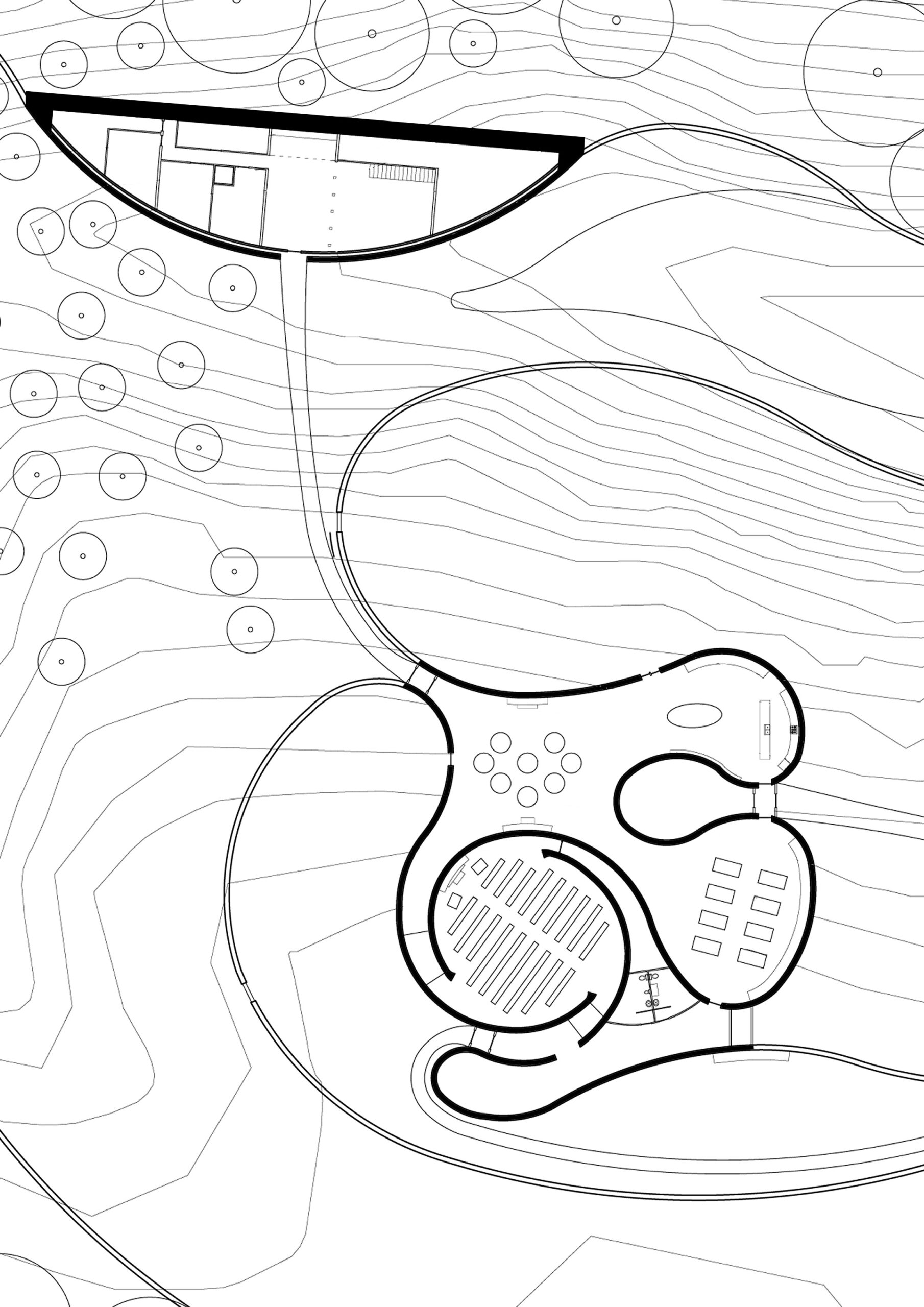
When a group of exiled Tibetan monks in southwest Ohio sought a new monastery, they asked for a design that could embody these beliefs. Their brief centered on a main Gompa — a public prayer hall where meditation and ritual could take place — alongside simple monastic lodgings and support spaces for visiting laypeople.
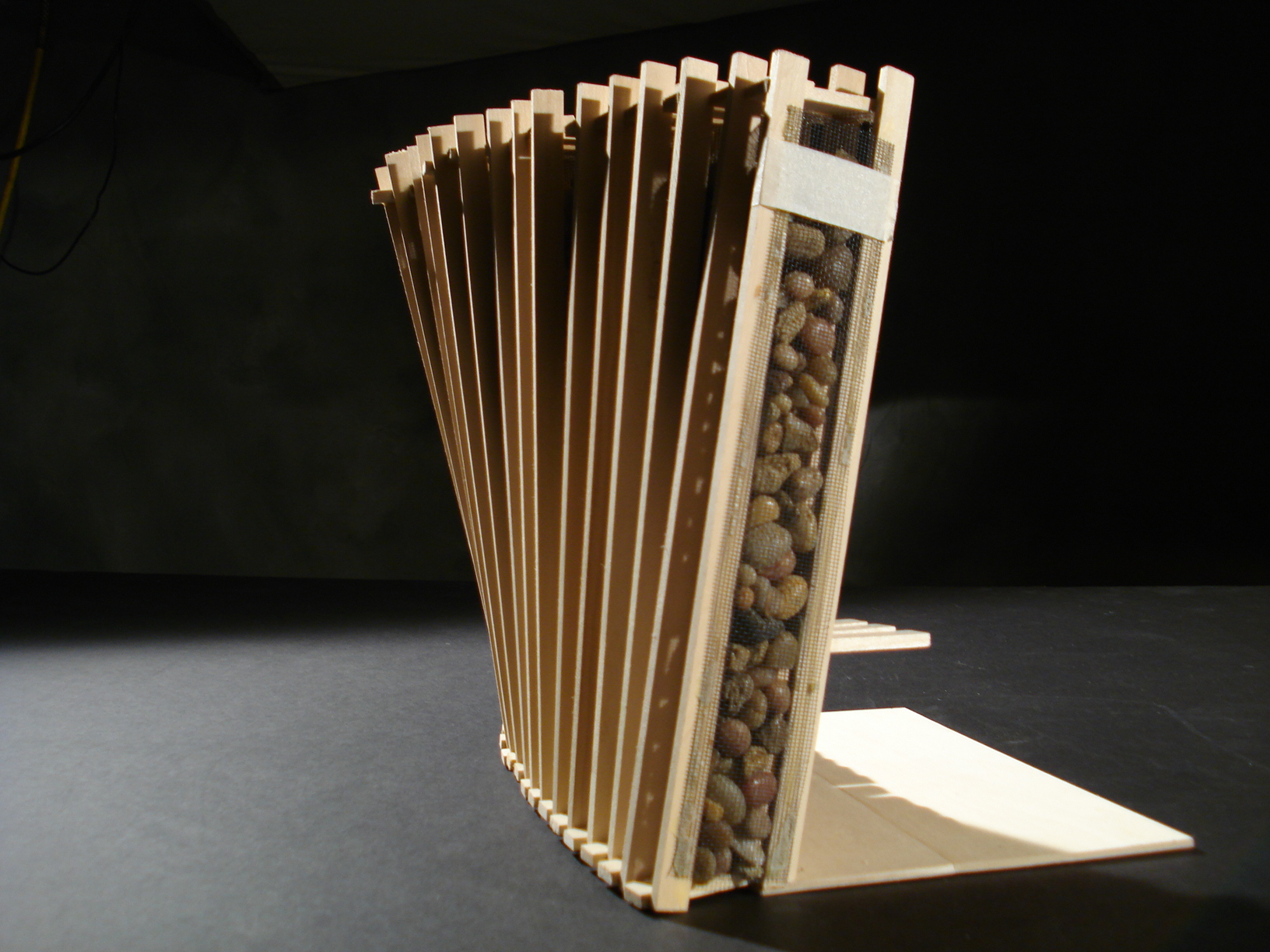
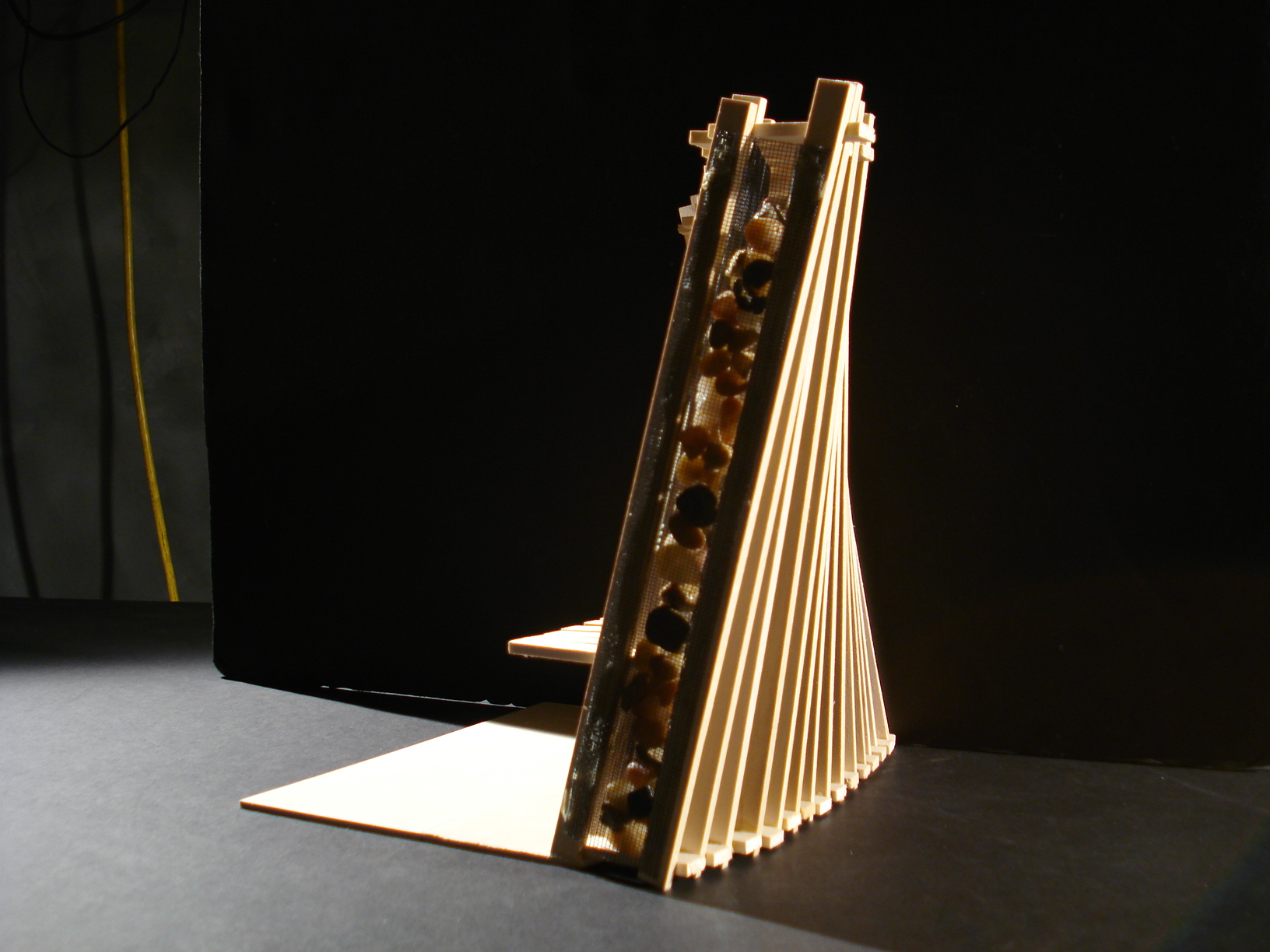
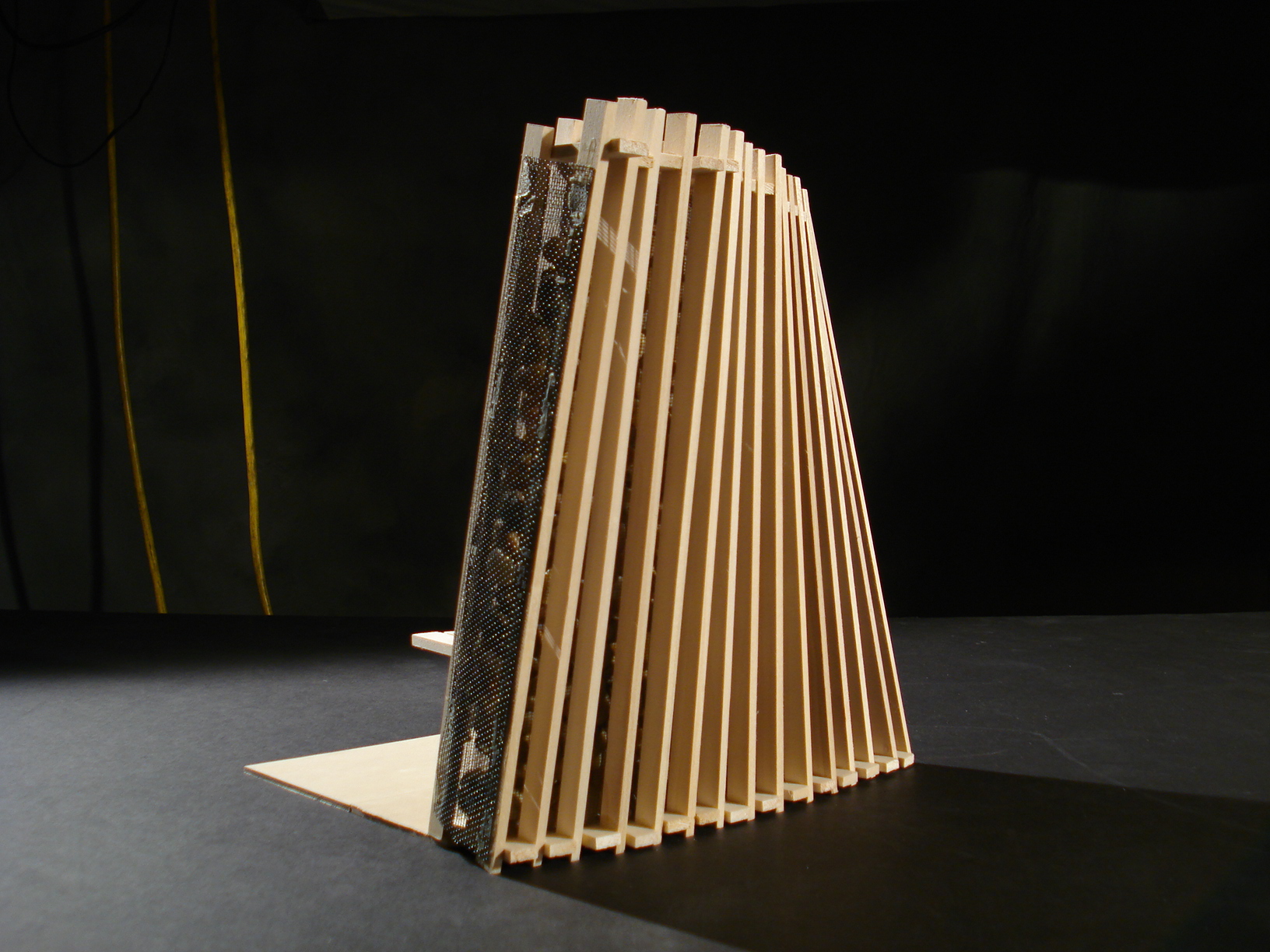
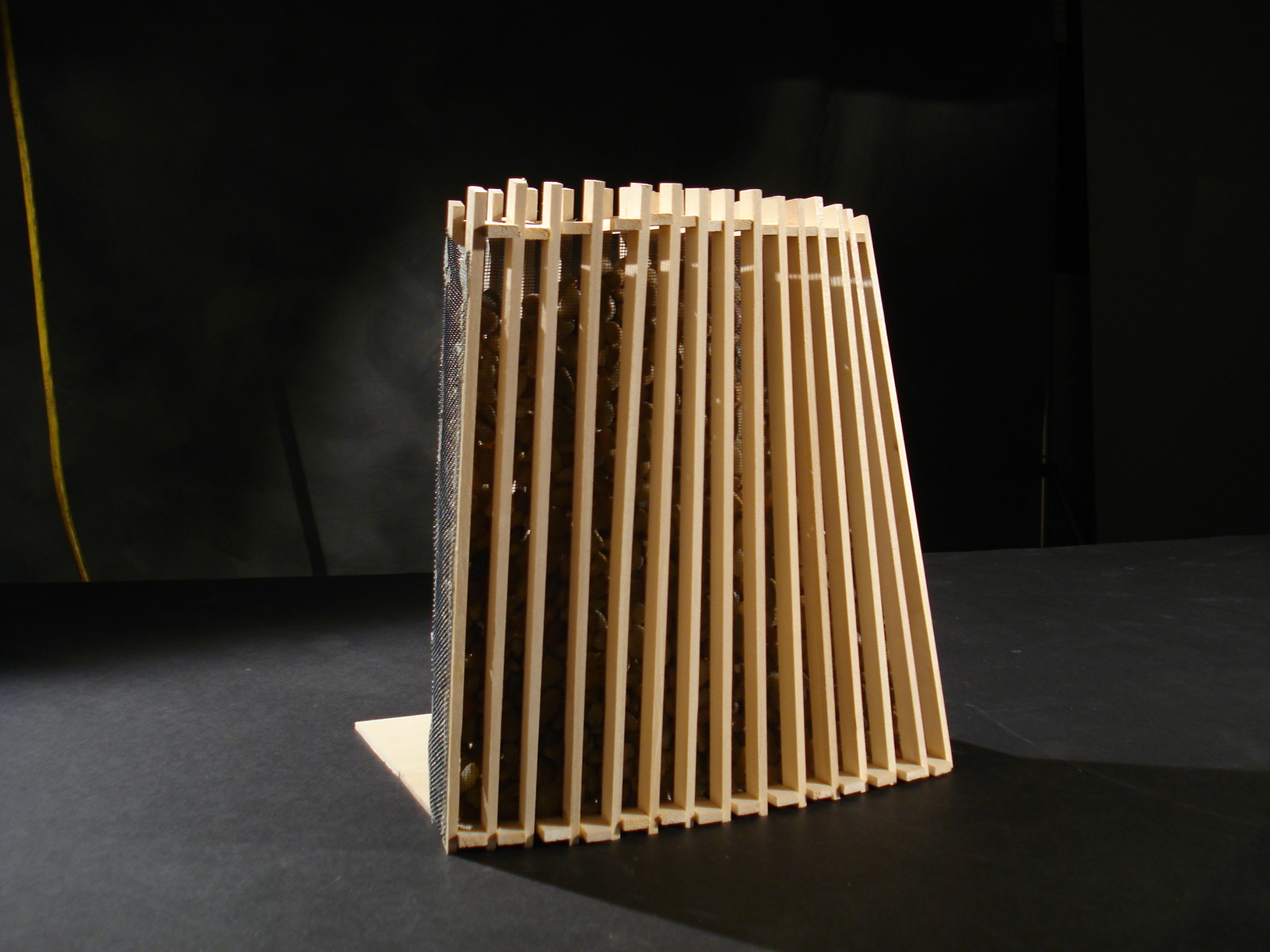
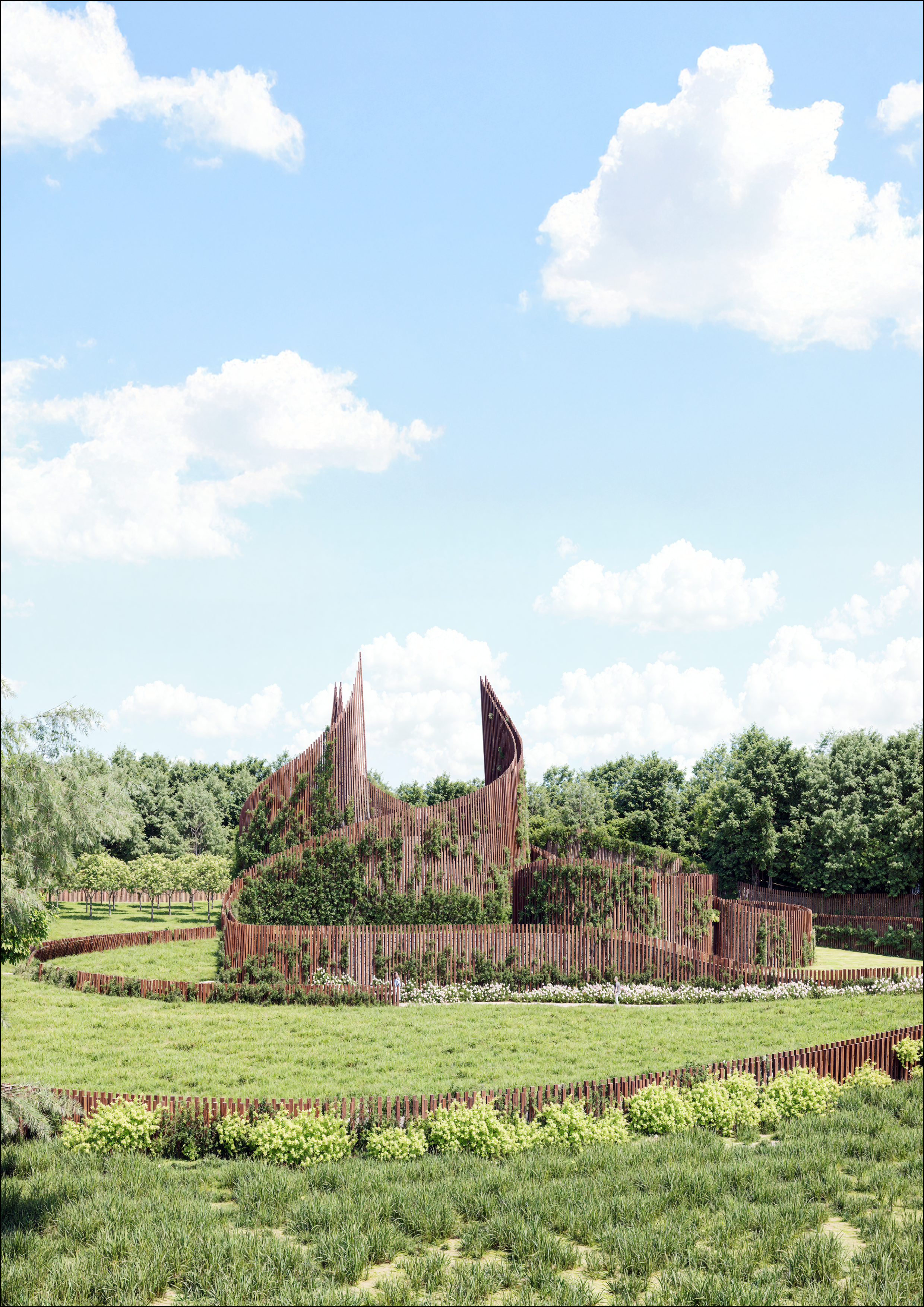
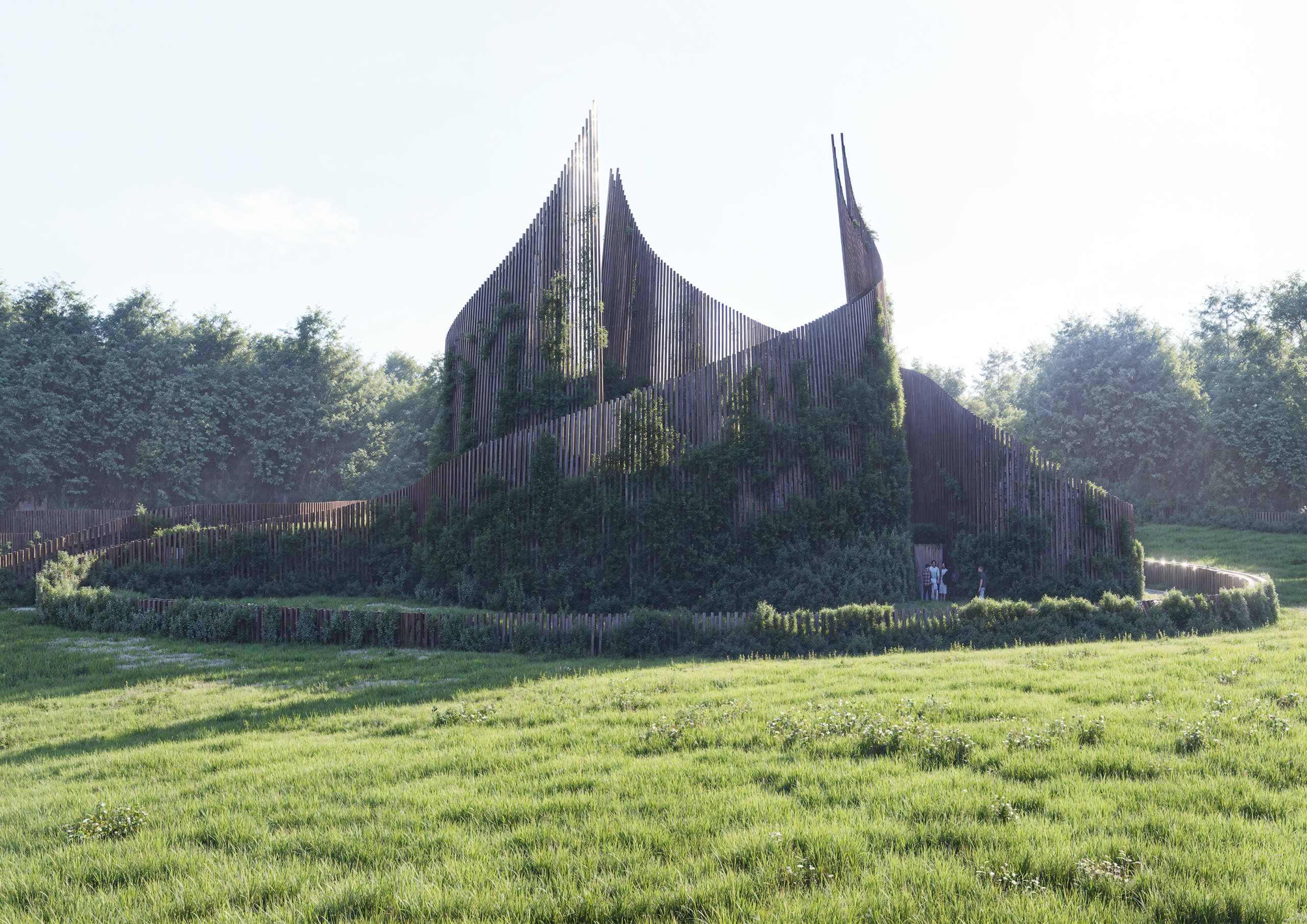
Our response was shaped around the idea of a wandering wall. Rather than a static perimeter, the wall undulates across the site, following the slope of the land. Composed of a rhythm of timber members, it defines indoor and outdoor rooms, cloisters, and courtyards. Its repetition evokes serenity, reflecting the continuity of reincarnation, while its shifting forms express adaptation and change.
At the center of the site, this rhythm pauses, and the cycle opens. The break creates a spatial monument, the Gompa — the spiritual heart of the monastery. Above this holy site, three spires rise as vertical markers of transcendence, signifying a break from the earthly cycle. The break is not a void, but a space defined by absence, a symbolic destination at the end of wandering.
The spatial sequence is designed as a journey. Walking the monastery is meant to feel like moving through states of being. One passes between wood and stone, inside and outside, shadow and light. Sometimes the wall folds close, narrowing into a cloister-like passage. Sometimes it opens wide, revealing gardens and sky. Visitors arriving for prayer encounter spaces that shift gradually and respond to the land, suggesting a whole as a continuous transition. The goal was not to design a monument to look at, but a journey to inhabit — a place where space and movement become meditation.
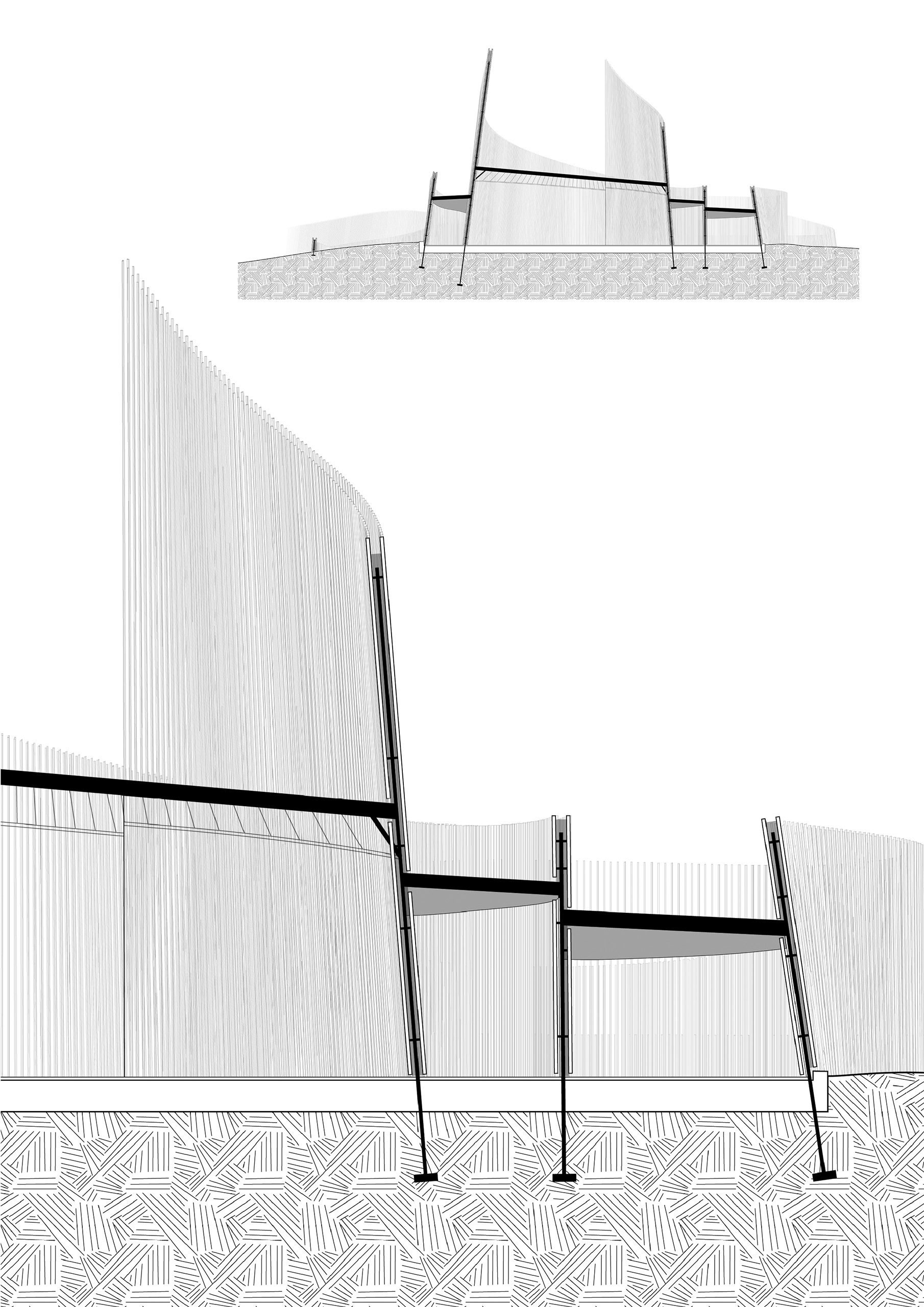
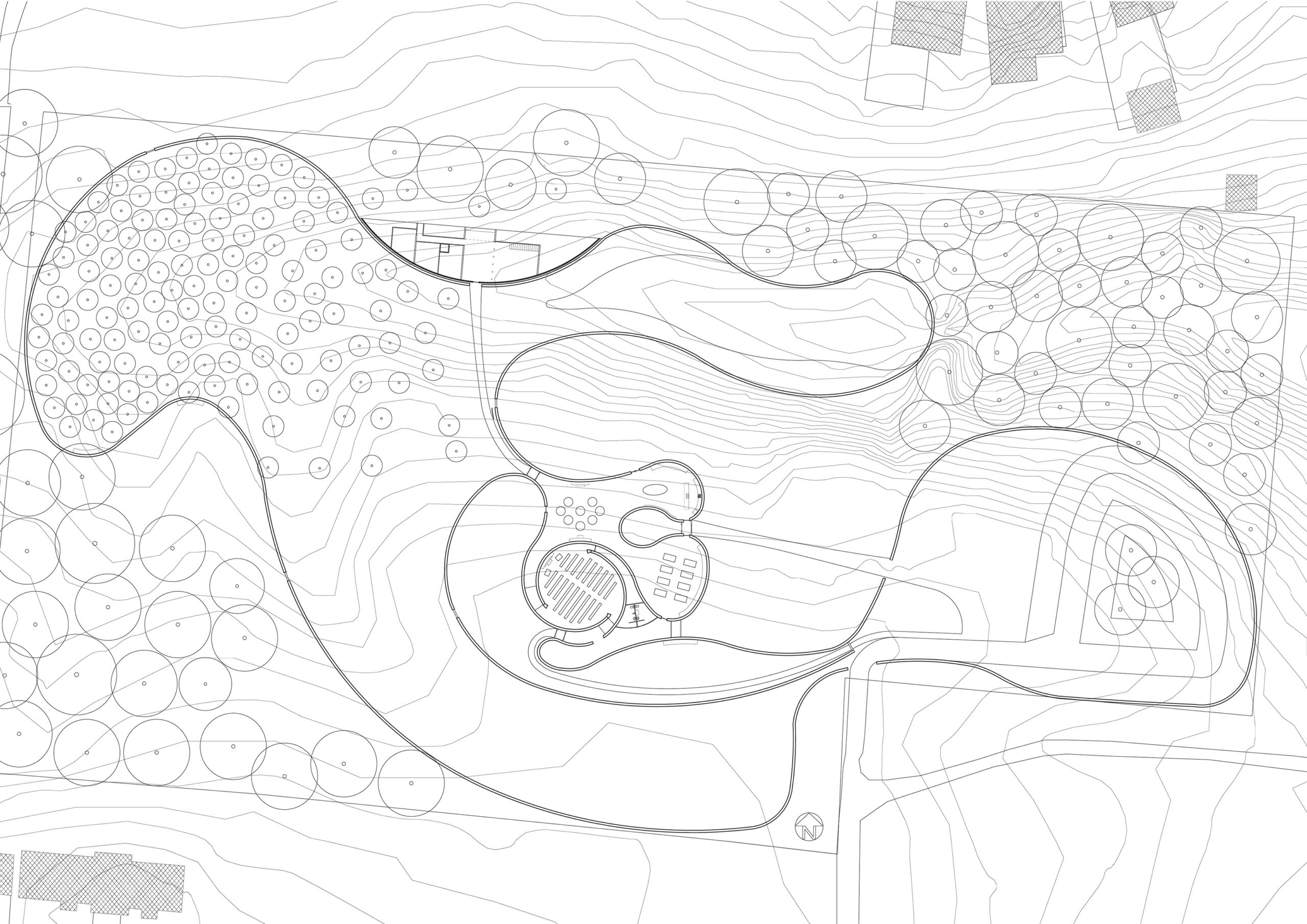
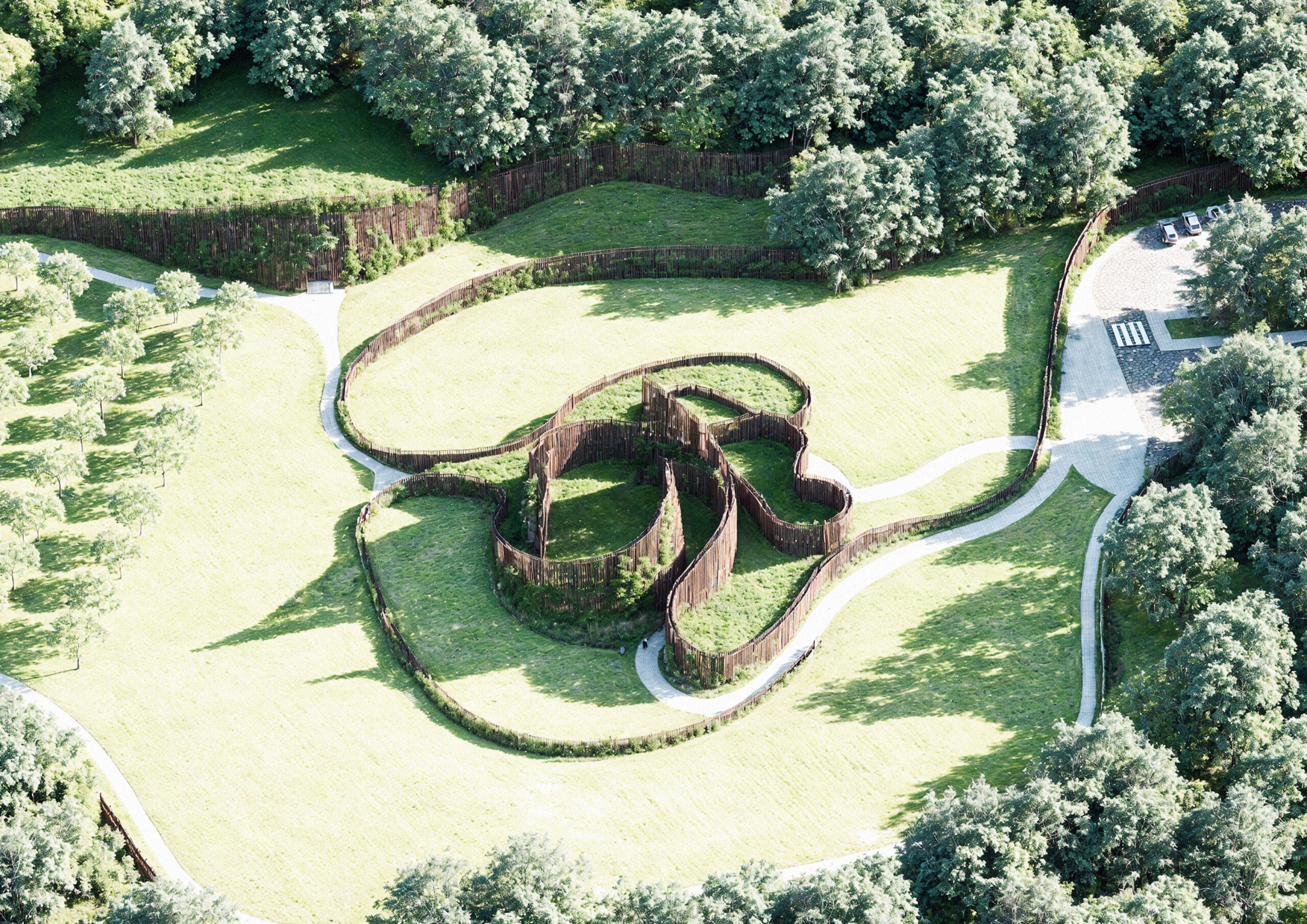
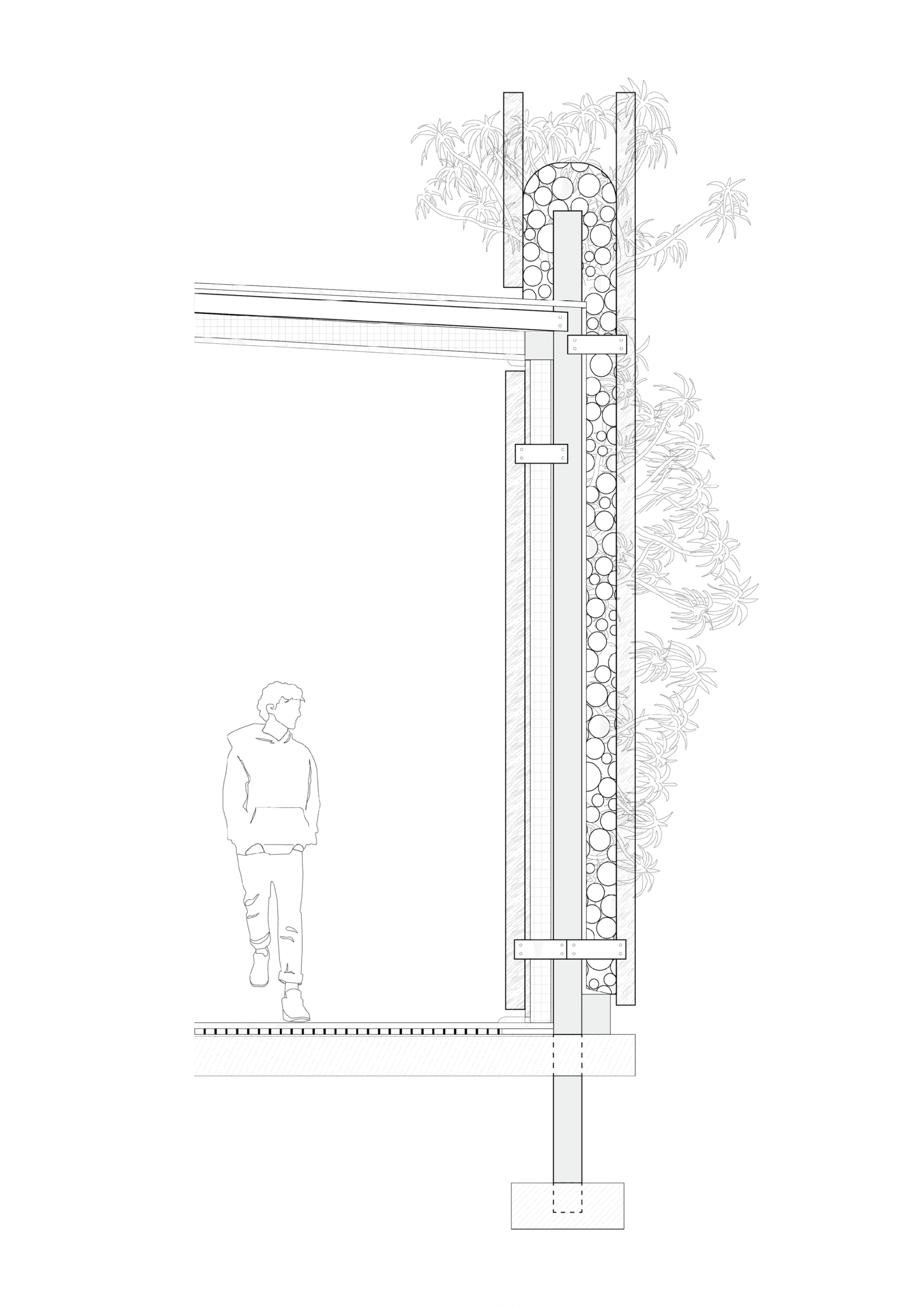
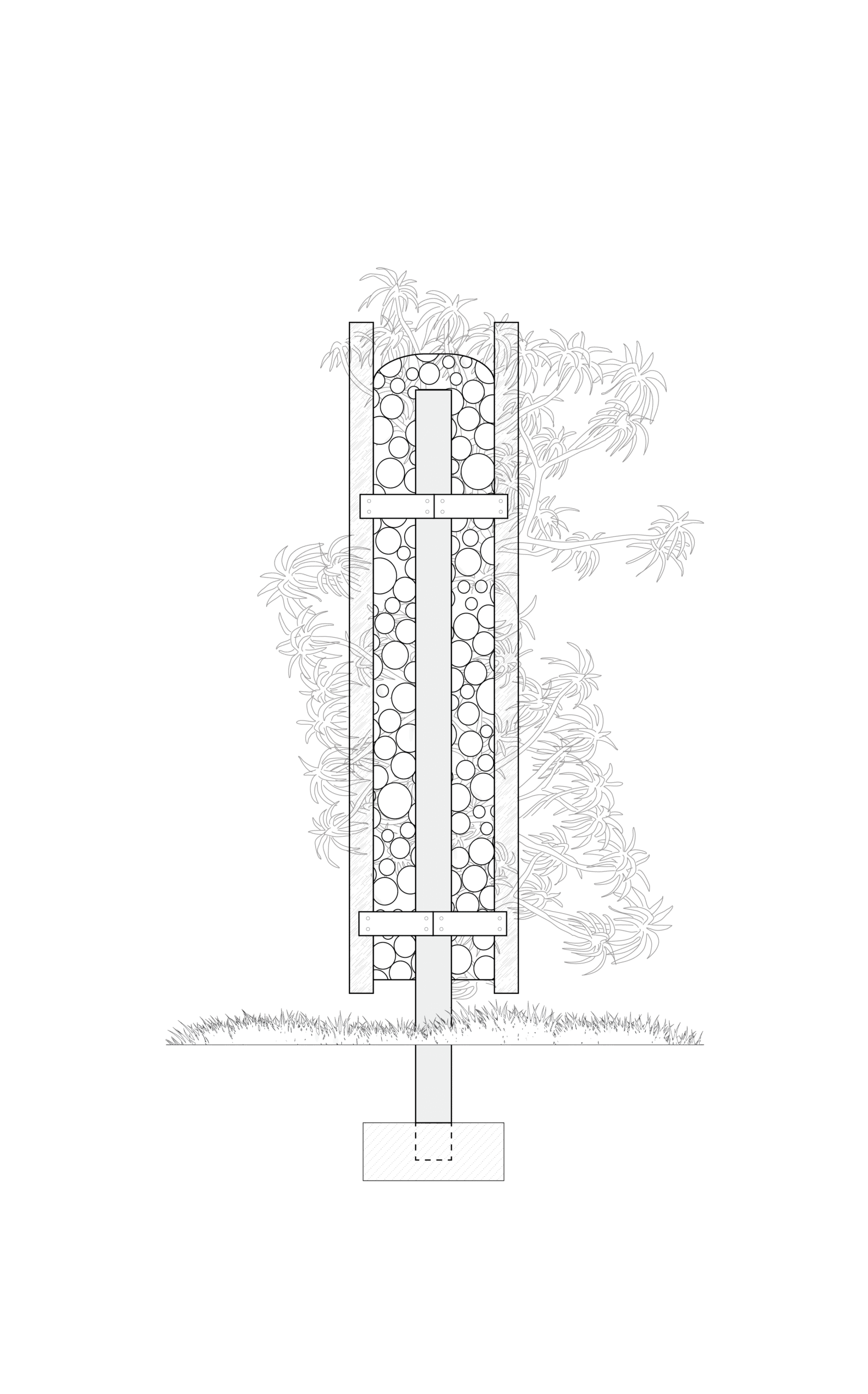
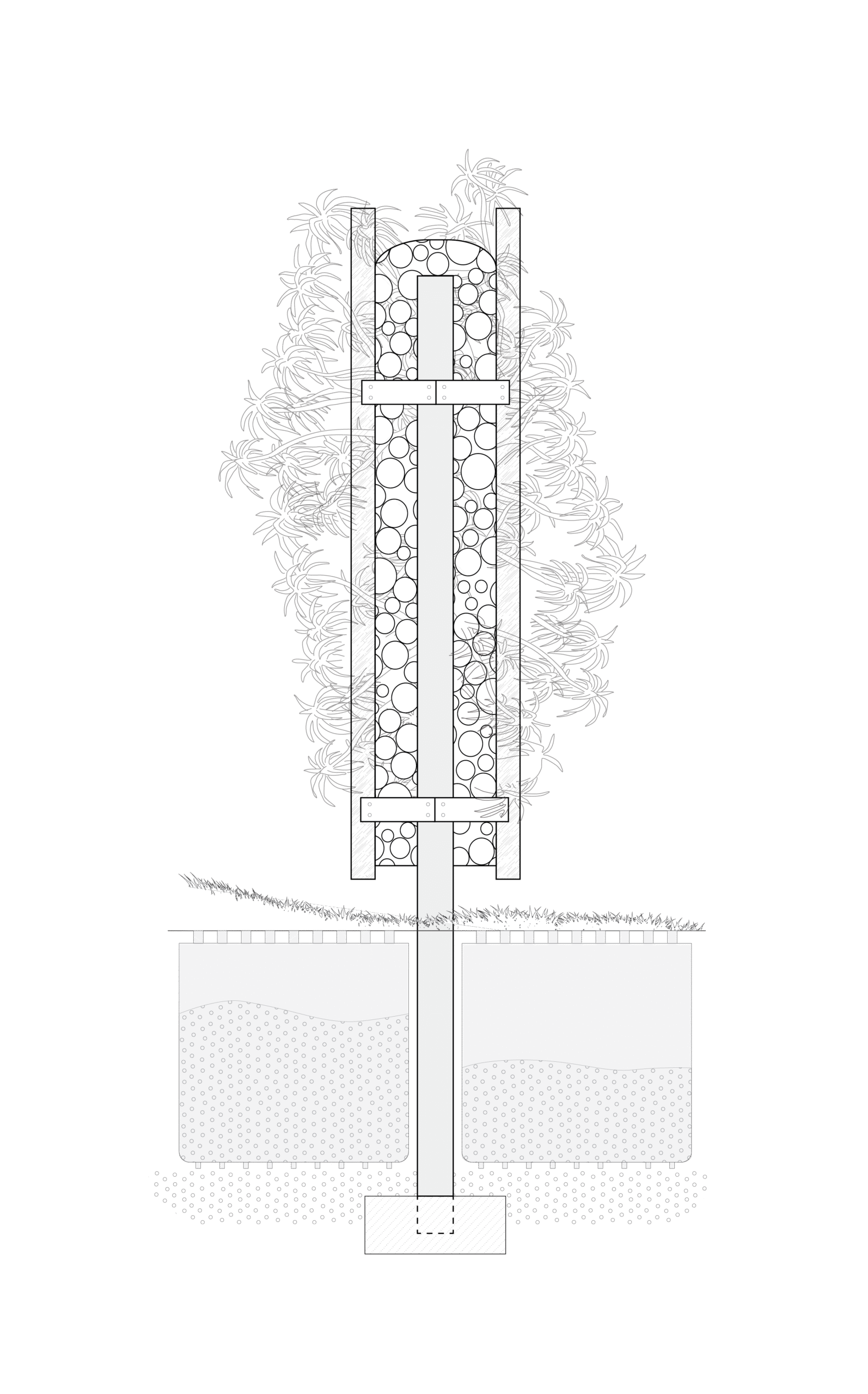
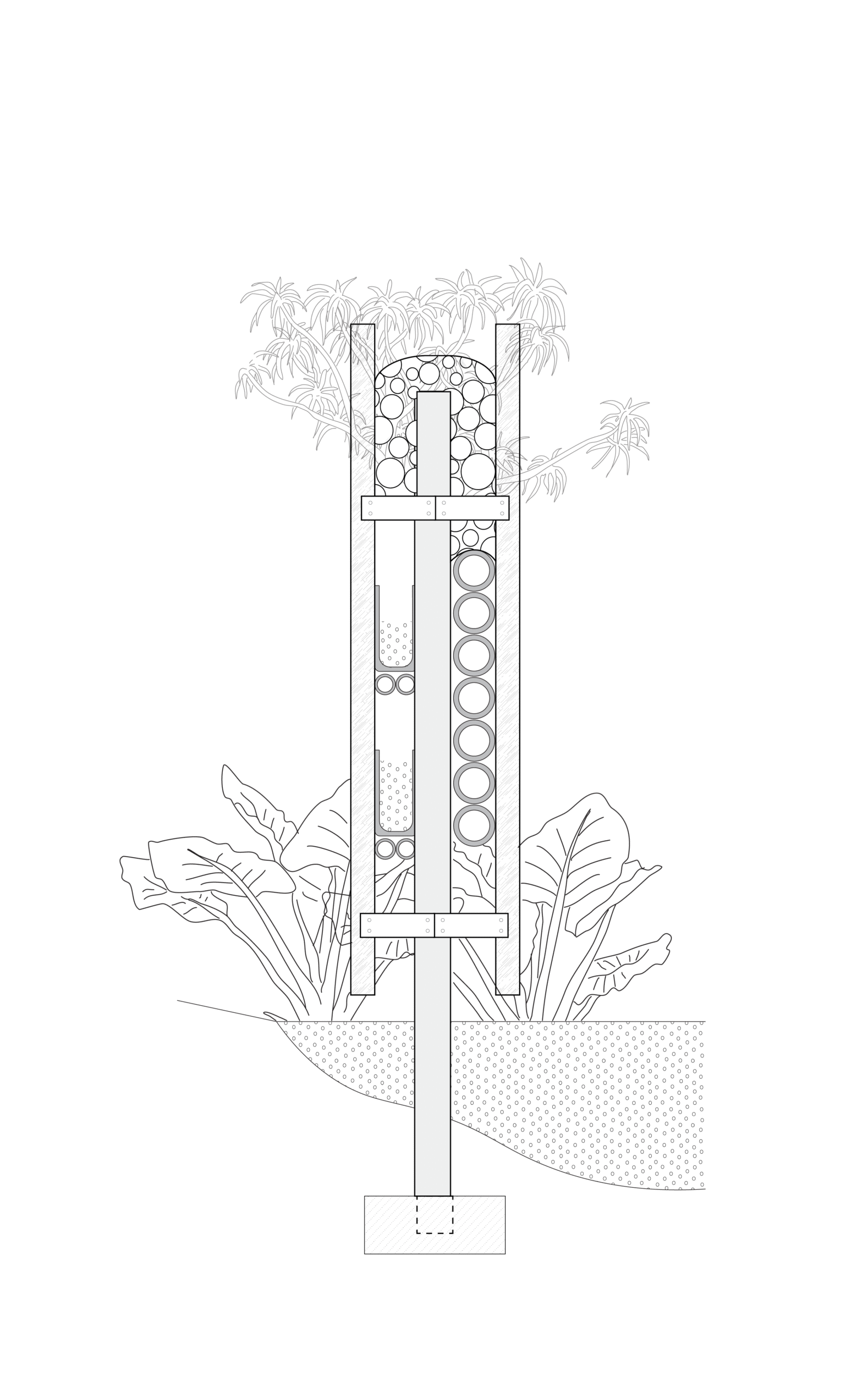
The monks emphasized that sustainability was not a technical requirement, but a moral one. Their belief system does not privilege human life over others, and their monastery should reflect that equality among all forms of life. To honor that, the majority of the wall was conceived as additional habitat. Stone rubble was salvaged from a crumbling building on site and stacked within the wall. This formed a porous mass that could hold soil and plants and function as shelter for birds, insects, and small animals from the surrounding forest. In this way, waste became material, and construction became a net positive for the local ecology.
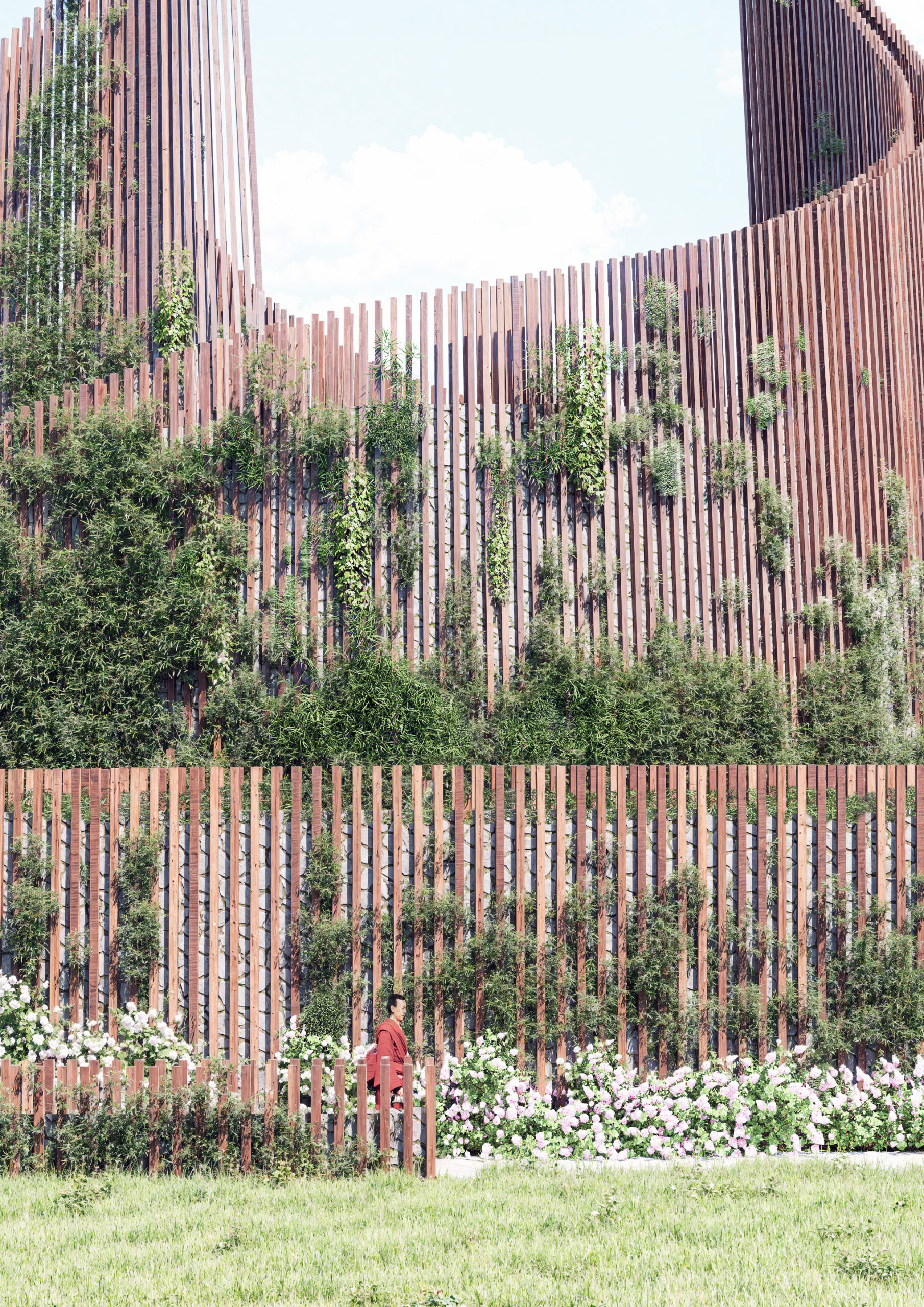
This choice of construction was also symbolic: just as karma carries traces of past lives into new existence, the wall carries fragments of the old into the new. The monastery is not divorced from its context; it is made from it.
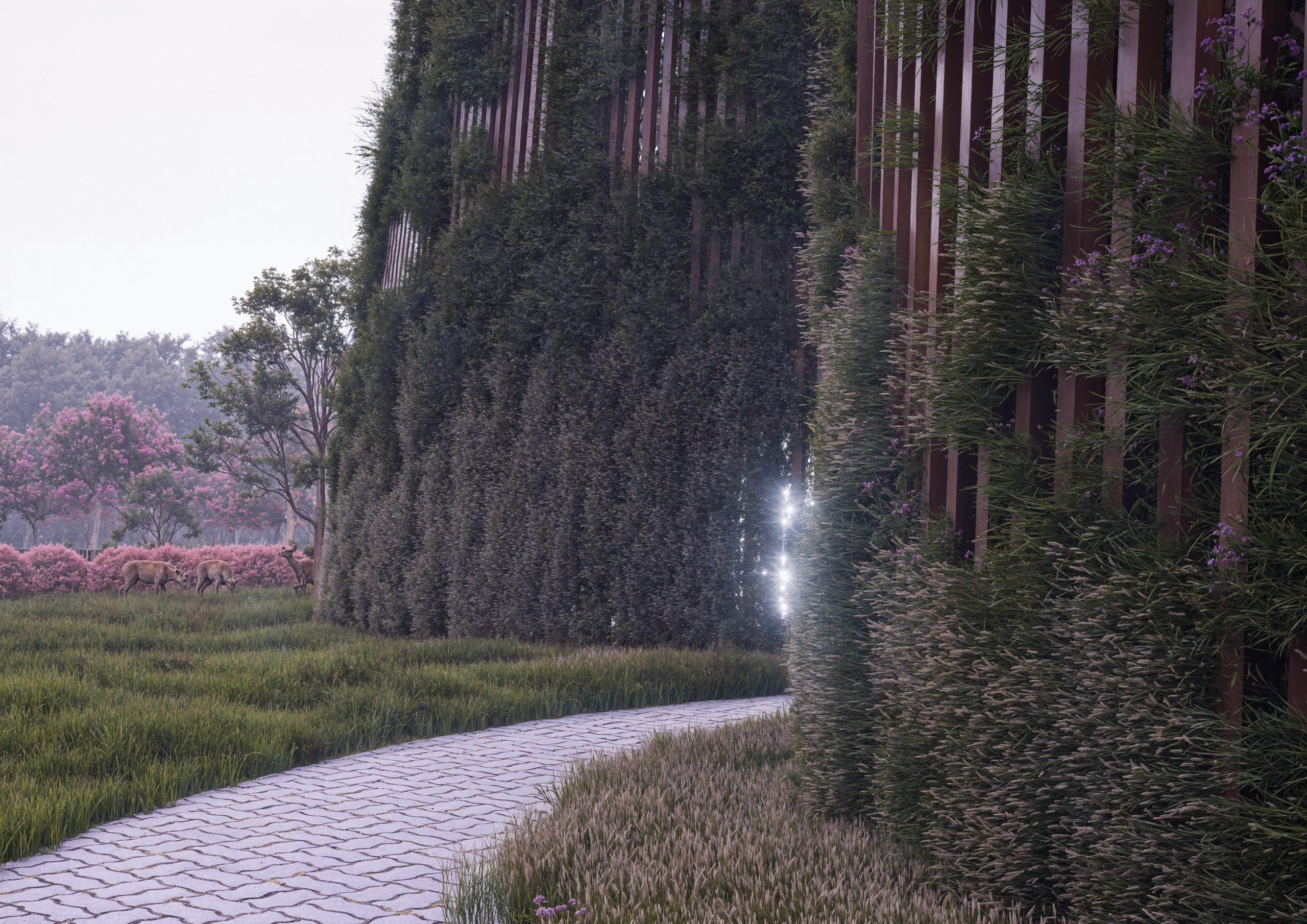
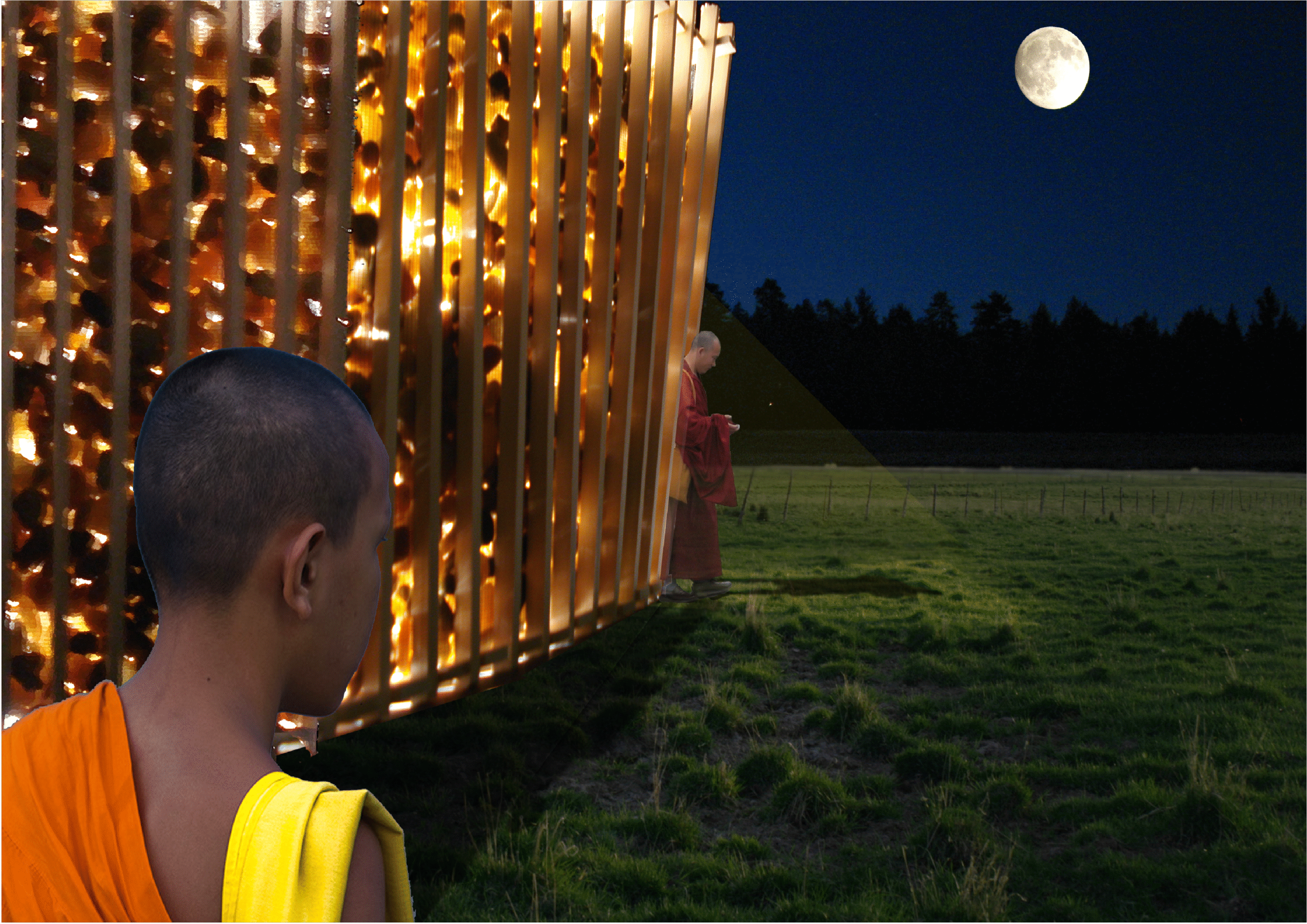
This project was never built, but it was presented to the monks as part of an exploratory phase of design. It was an example of how architecture can engage philosophy, culture, sustainability, and spirituality all at once. It aimed to show how architecture could nurture life in all its forms — a living process that grows with its inhabitants and serves as a physical meditation on impermanence.