
Agricultural Archive
Jegi-Dong Fruit and Vegetable Library
2019
Cheongryangri, Seoul
Public Library
Unbuilt Proposal
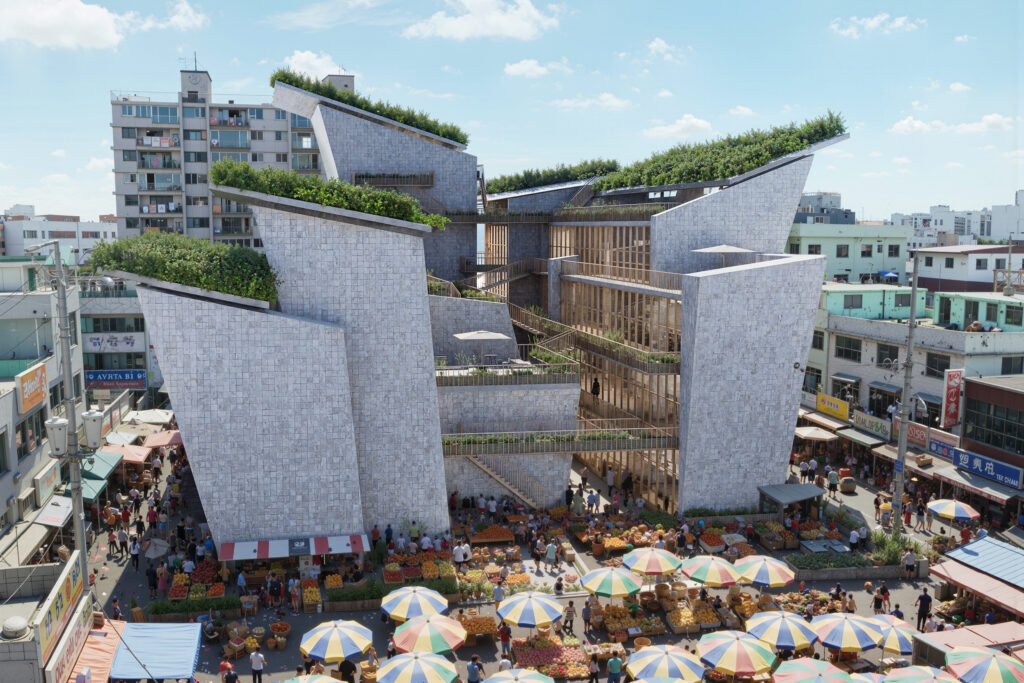
In the digital era, libraries and markets are undergoing parallel transformations. No longer defined purely by storage or exchange, they operate as civic interfaces where knowledge and culture emerge through encounter and participation. The Jegi-dong Fruit and Vegetable Library reimagines these institutions as a single system: a public archive that gathers the dispersed intelligence of Seoul’s traditional markets and reconfigures it as a framework for collective learning.
Traditional Korean markets are intricate networks of material, social, and spatial exchange. Their vitality lies in density and flexibility, in the informal relationships that structure daily life. Yet as cities evolve, these environments face gradual erosion. Branded supermarkets and digital marketplaces promise efficiency but sever the relational fabric markets sustain: personal transactions, shared expertise, and accumulated trust. For younger residents, markets appear opaque and impenetrable. Yet beneath that density lies a living infrastructure of knowledge. The question is how to allow this assemblage to evolve—to accommodate new participants without dissolving its collective intelligence.
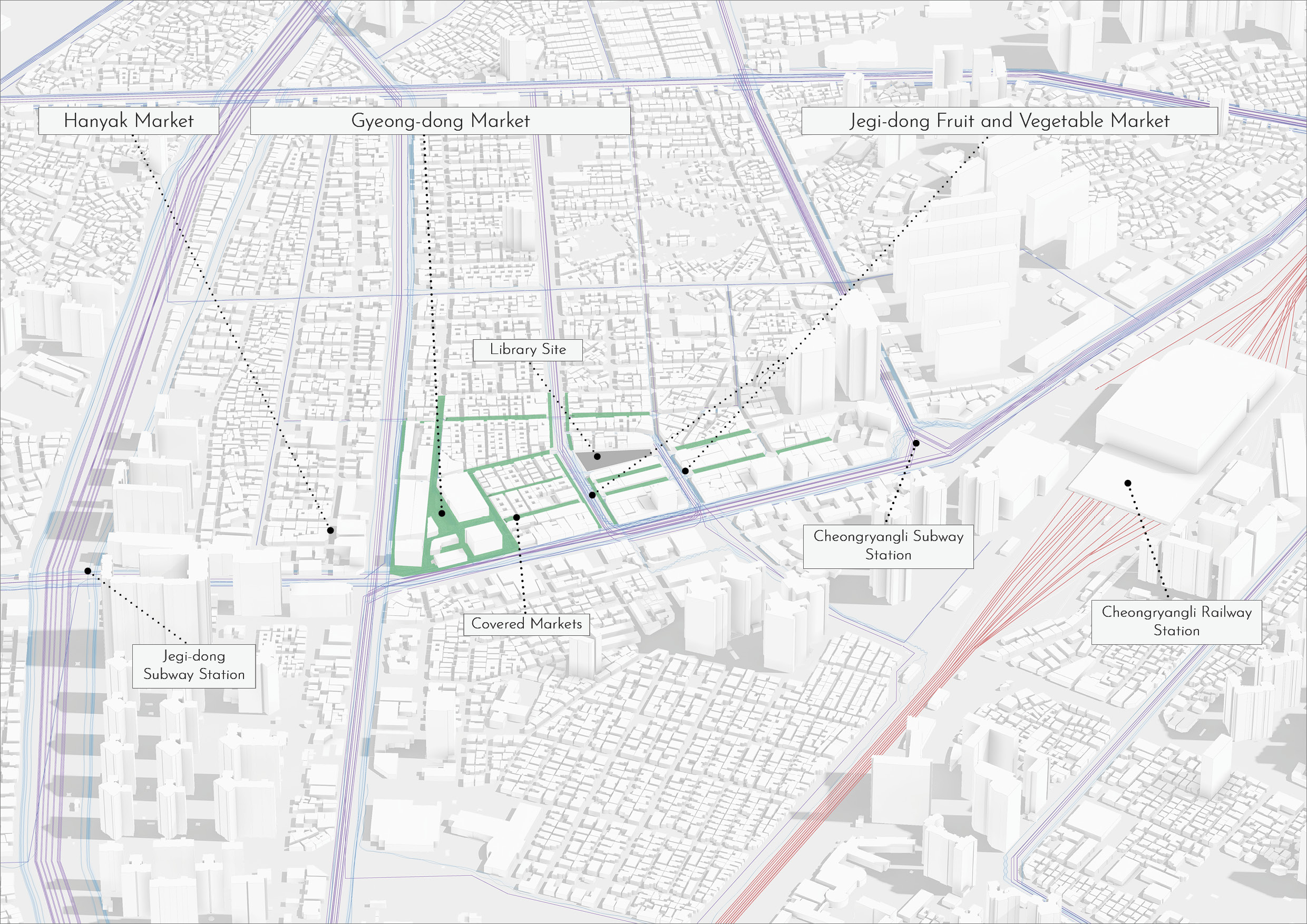
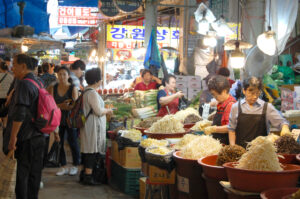
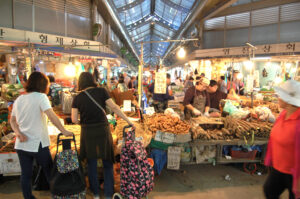
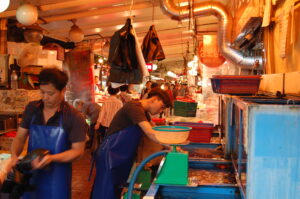
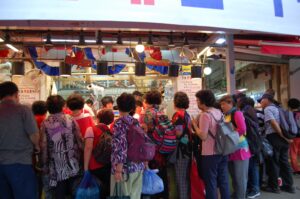
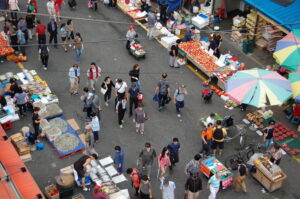
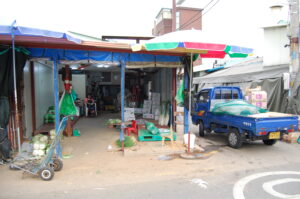
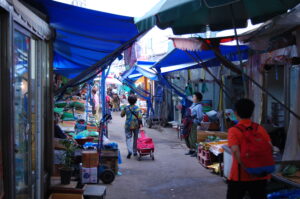
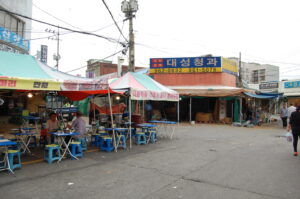
Jegi-dong exists at the seam between two urban conditions: the traditional markets serving small vendors and an older generation, and new apartment towers marking rapid redevelopment. Some of the markets are vibrant with formal building spaces and well-maintained street coverings. Further back in the fruit and vegetable market is a sparse collection of local meeting spaces and vacancies. This presents an opportunity to transform those meeting spaces and that local knowledge into a shared, evolving resource, activating and enriching its current functions with newcomers rather than gentrifying them away.
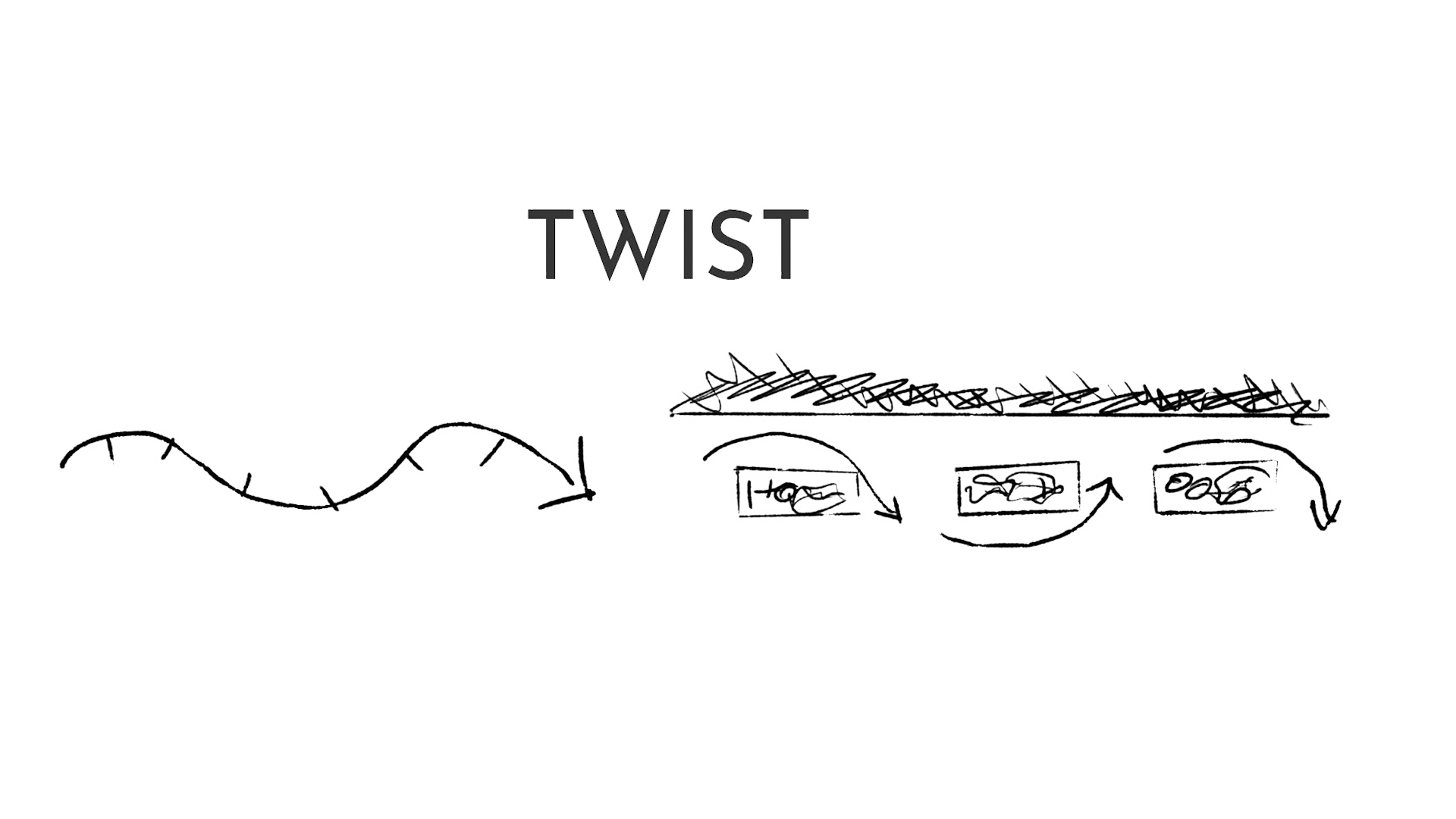
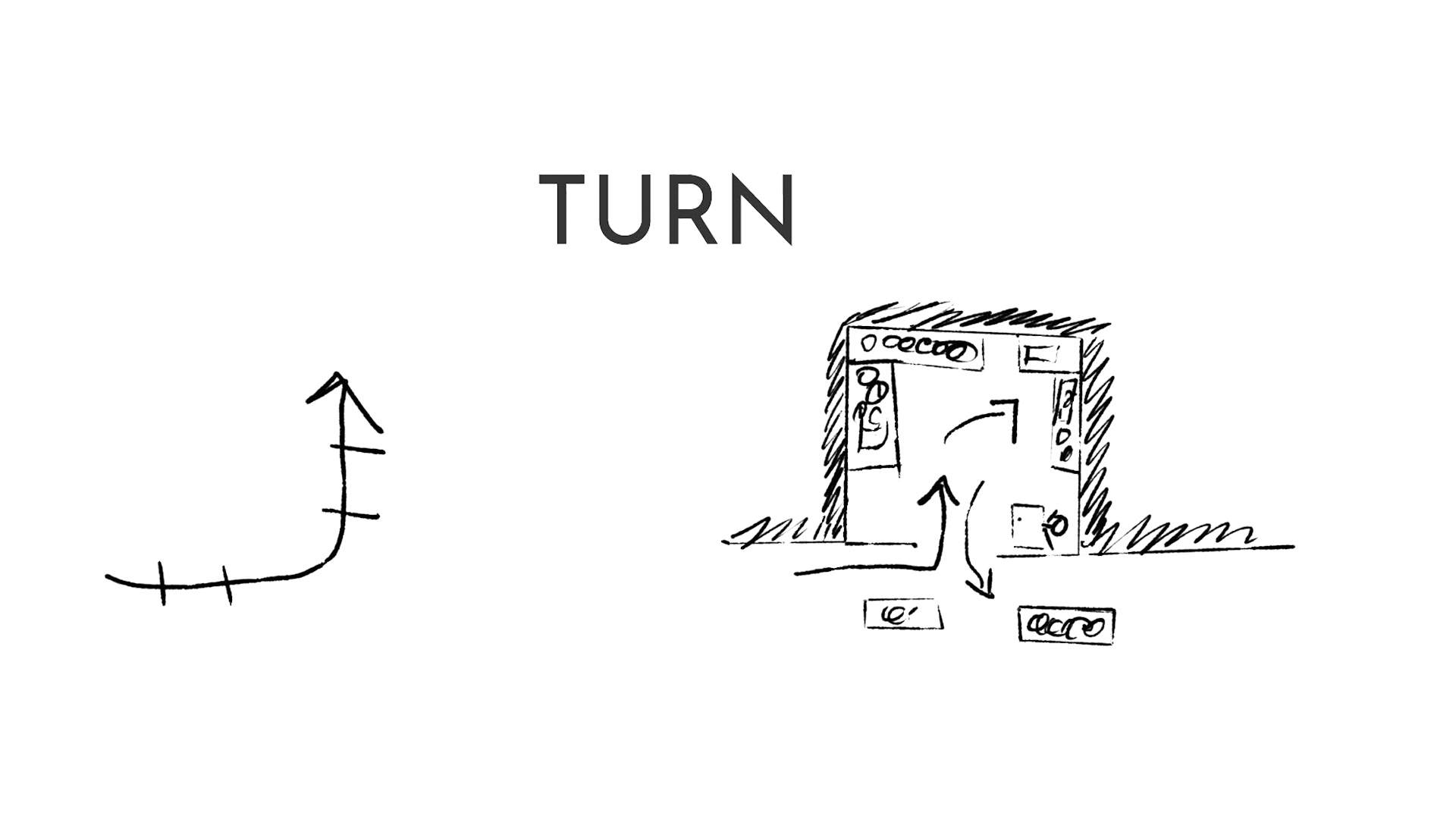
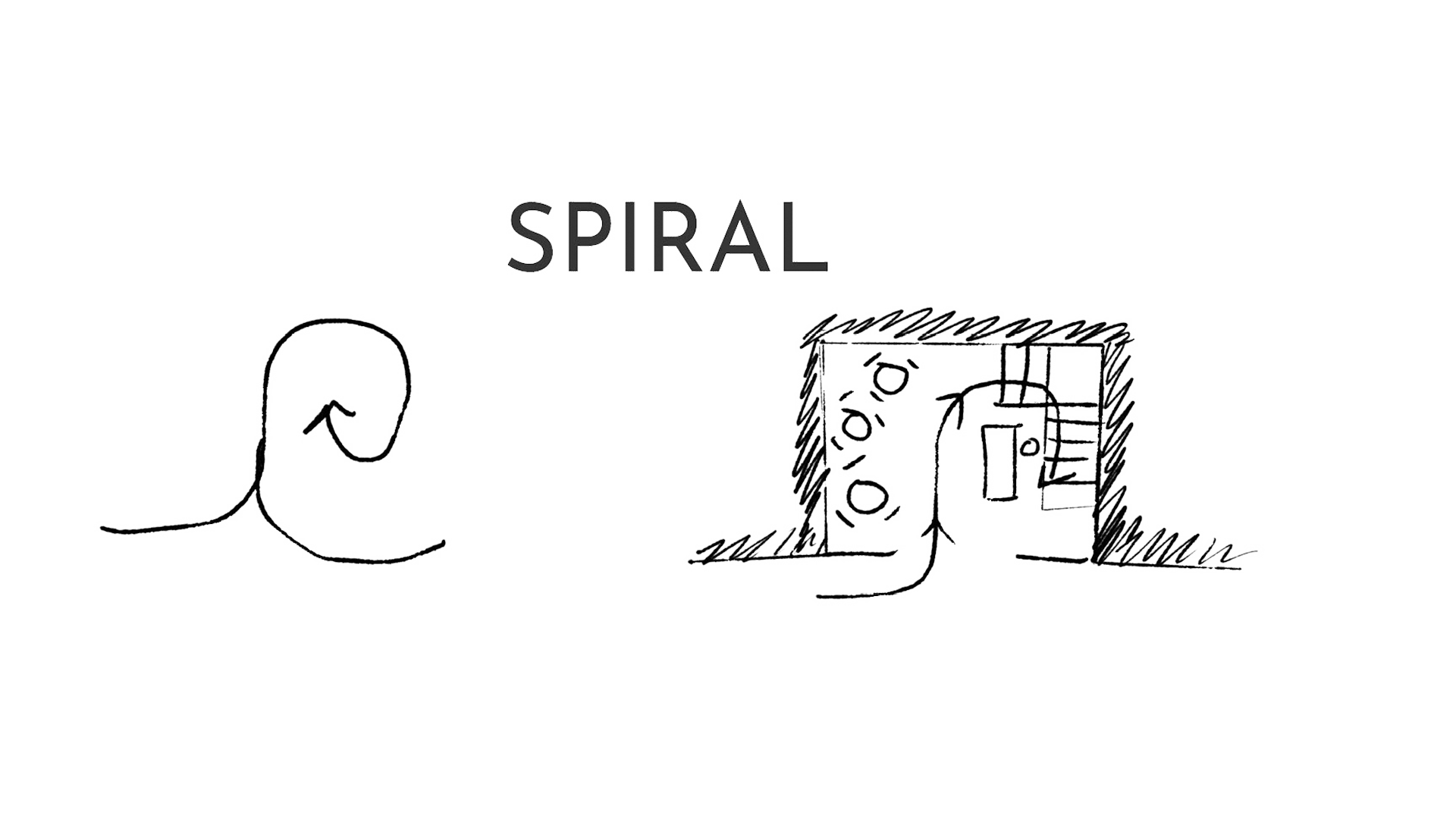
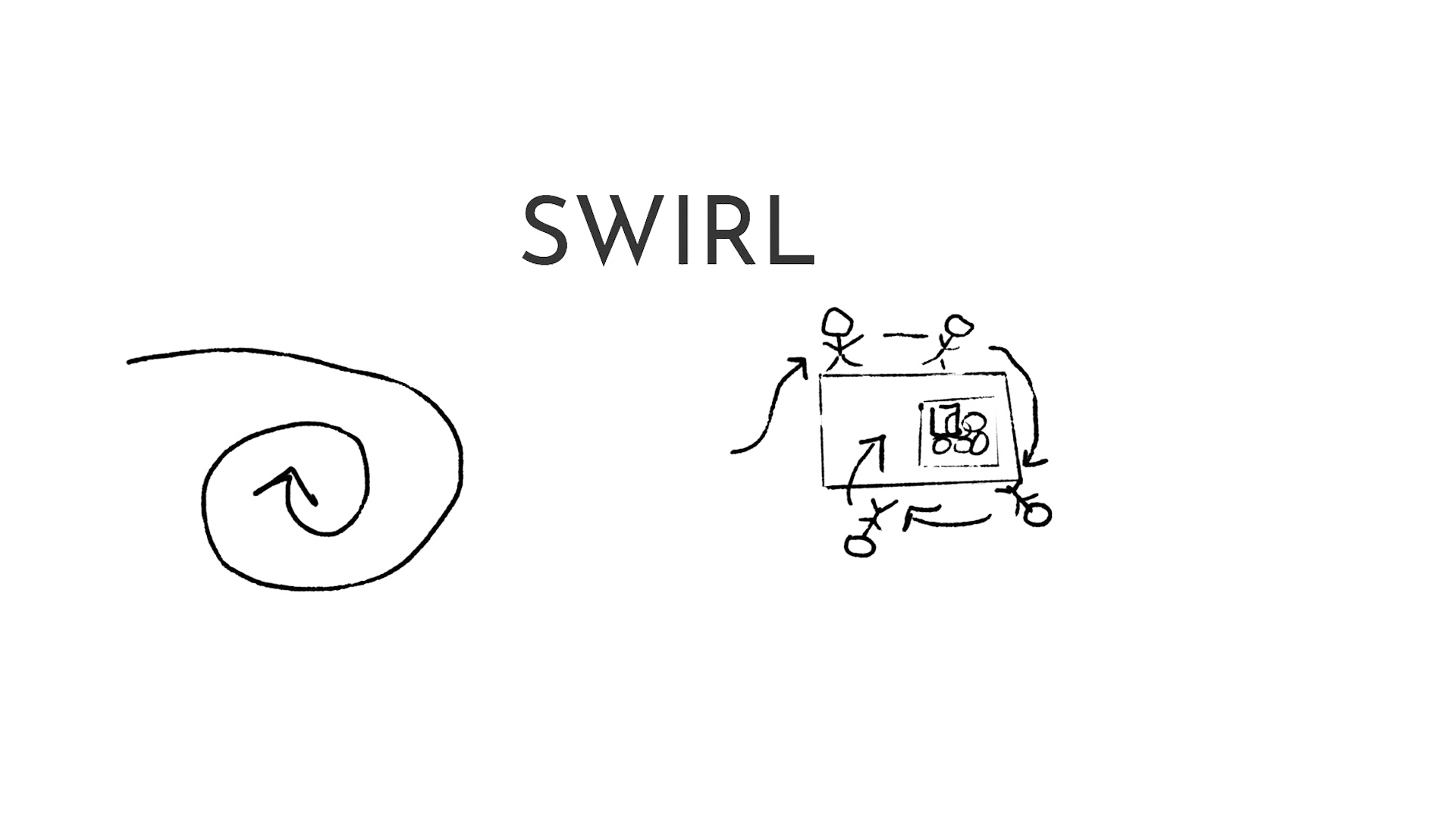
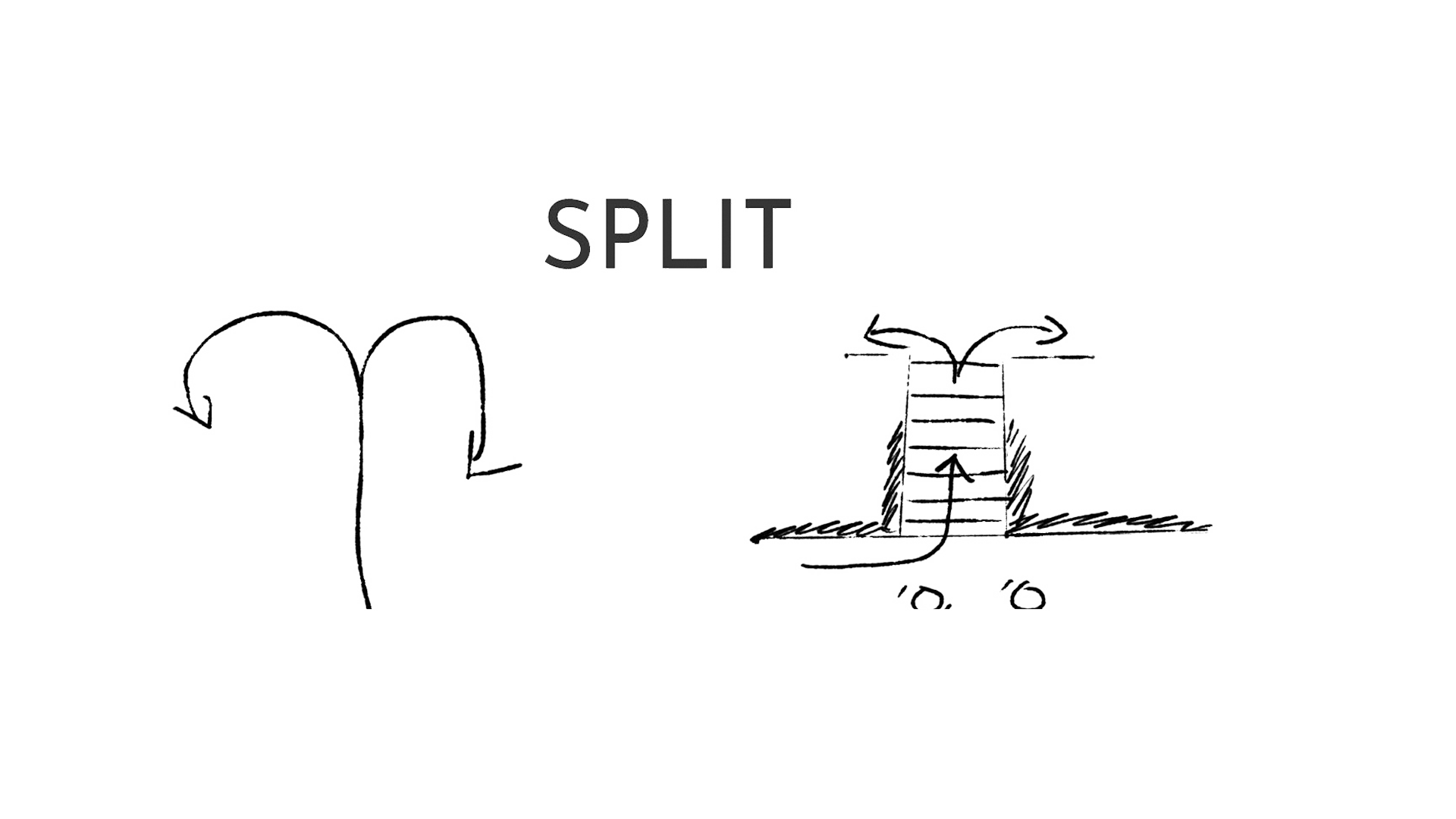
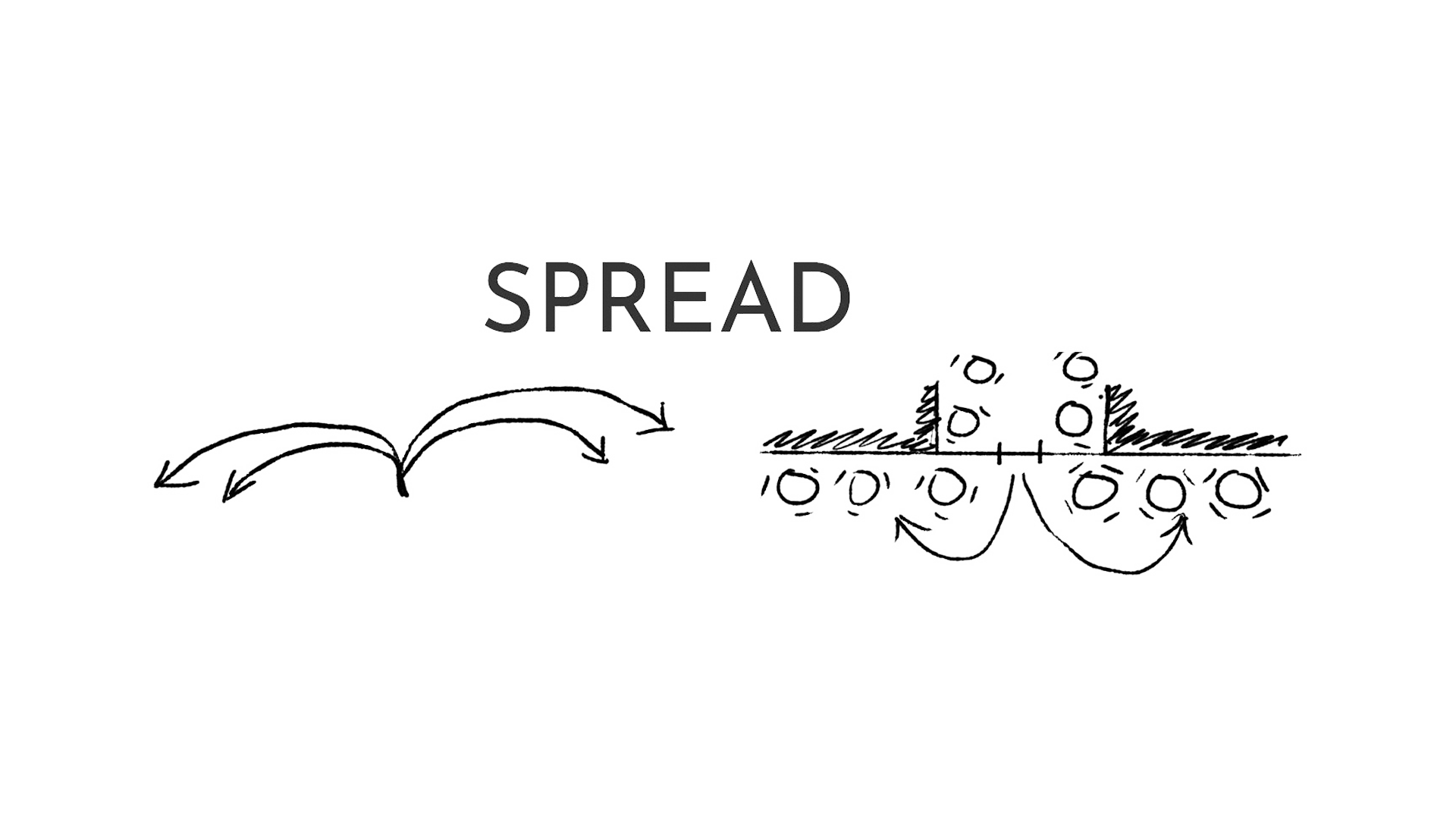
The architectural strategy derives from studying circulation patterns in Korean markets: abrupt elevation changes, the overlap of pedestrian routes, the relationship between permanent structures and temporary additions, and the balance of defined paths and improvised shortcuts.
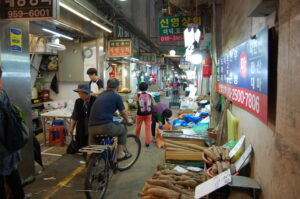
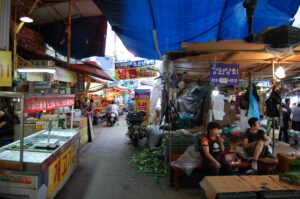
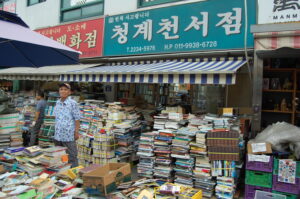
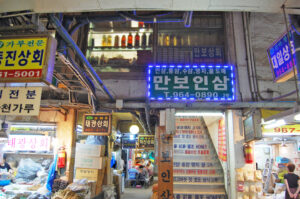
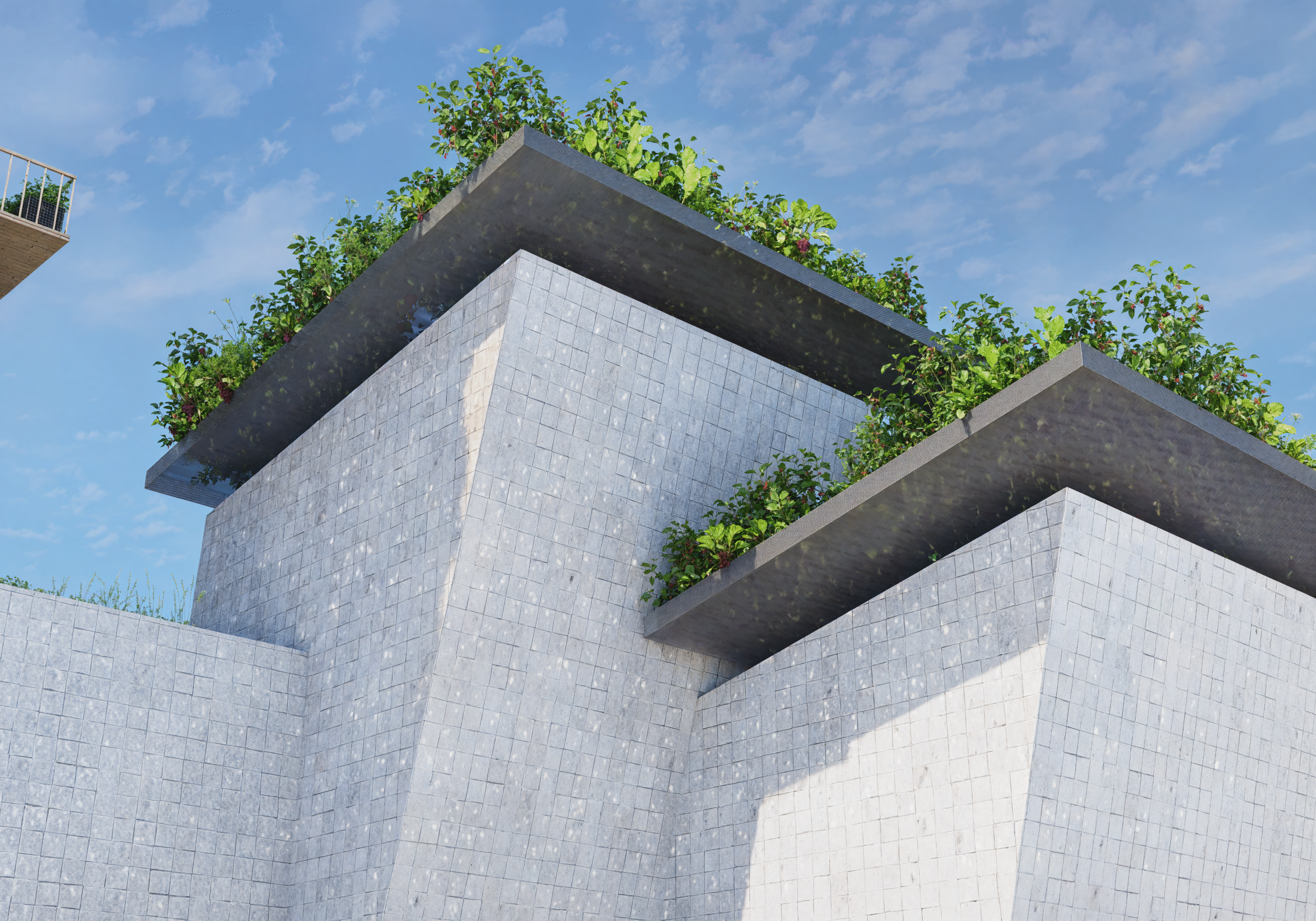
Two organizational systems operate in productive tension. Heavy geometric masses containing educational spaces, a central library volume, and an archive tower emerge as distinct yet interdependent elements referencing the brick-and-mortar elements of the market in both form and material.
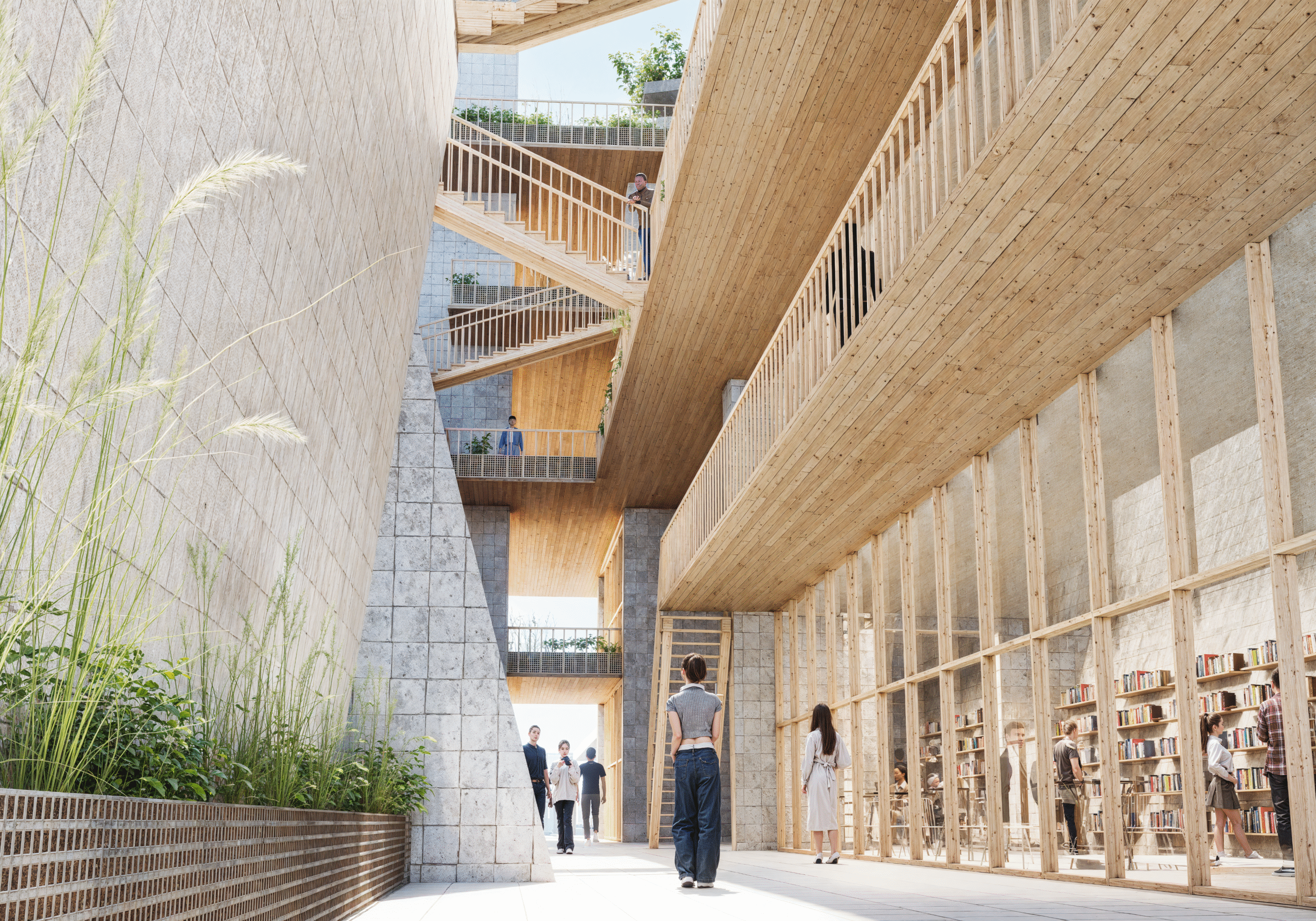
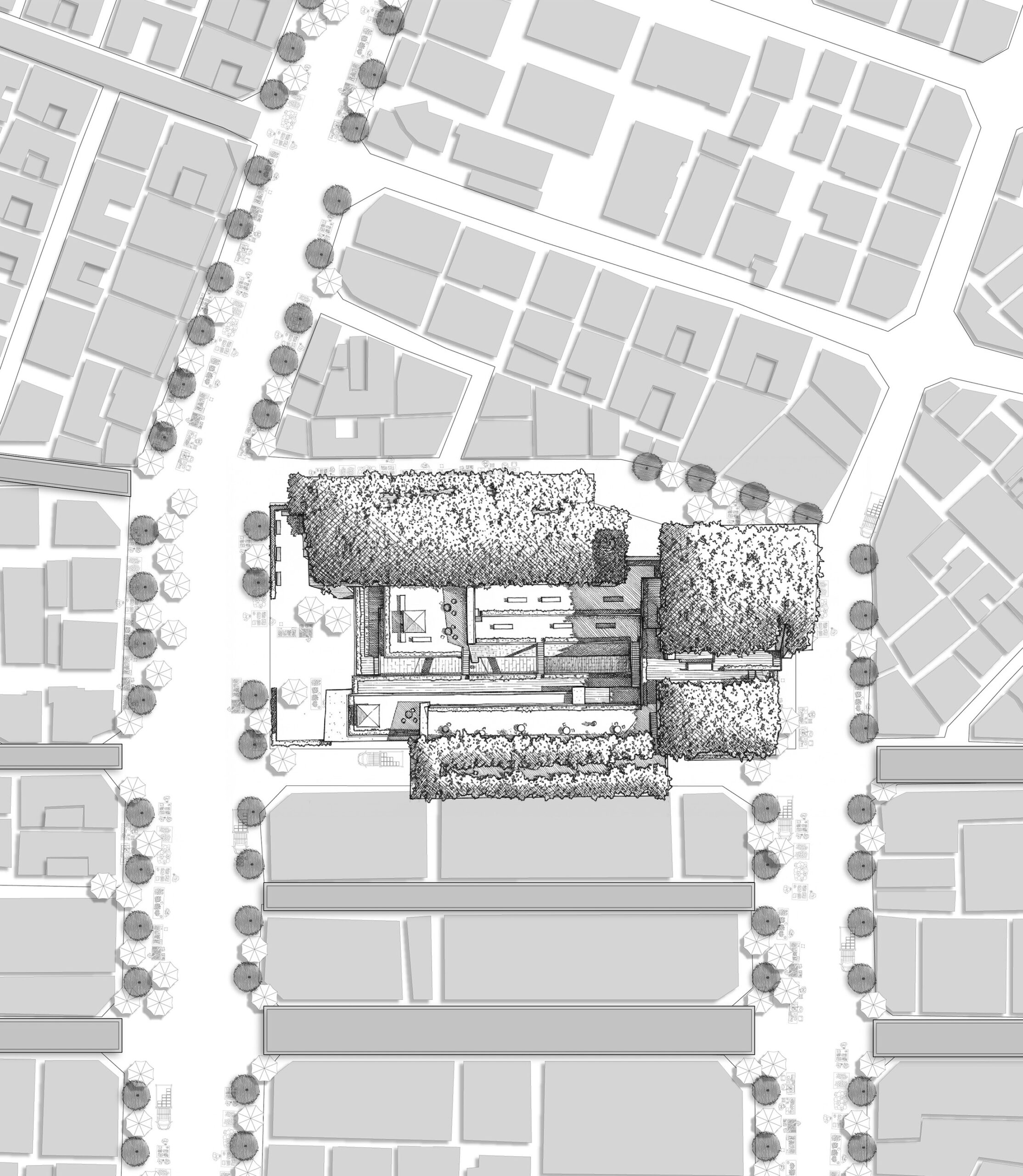
The ground floor continues the grain of surrounding stalls, forming a covered passage that draws pedestrians through the site.
Between this grain and mass, a more adaptive network of spaces accommodates gardens, book stacks, and transitional zones. This secondary system responds to observations of how Korean markets expand and contract over time: incremental, responsive, opportunistic. The result is a building that operates both systematically and experientially, where circulation generates the exploratory quality appropriate to both market browsing and educational discovery.
Connections between volumes function as environmental and social interfaces. Kitchens overlook cultivation areas. Reading spaces maintain a visual connection to market activity. Gardens filter light entering interior spaces. The building is defined less by boundaries than by relationships among program, people, and atmosphere.
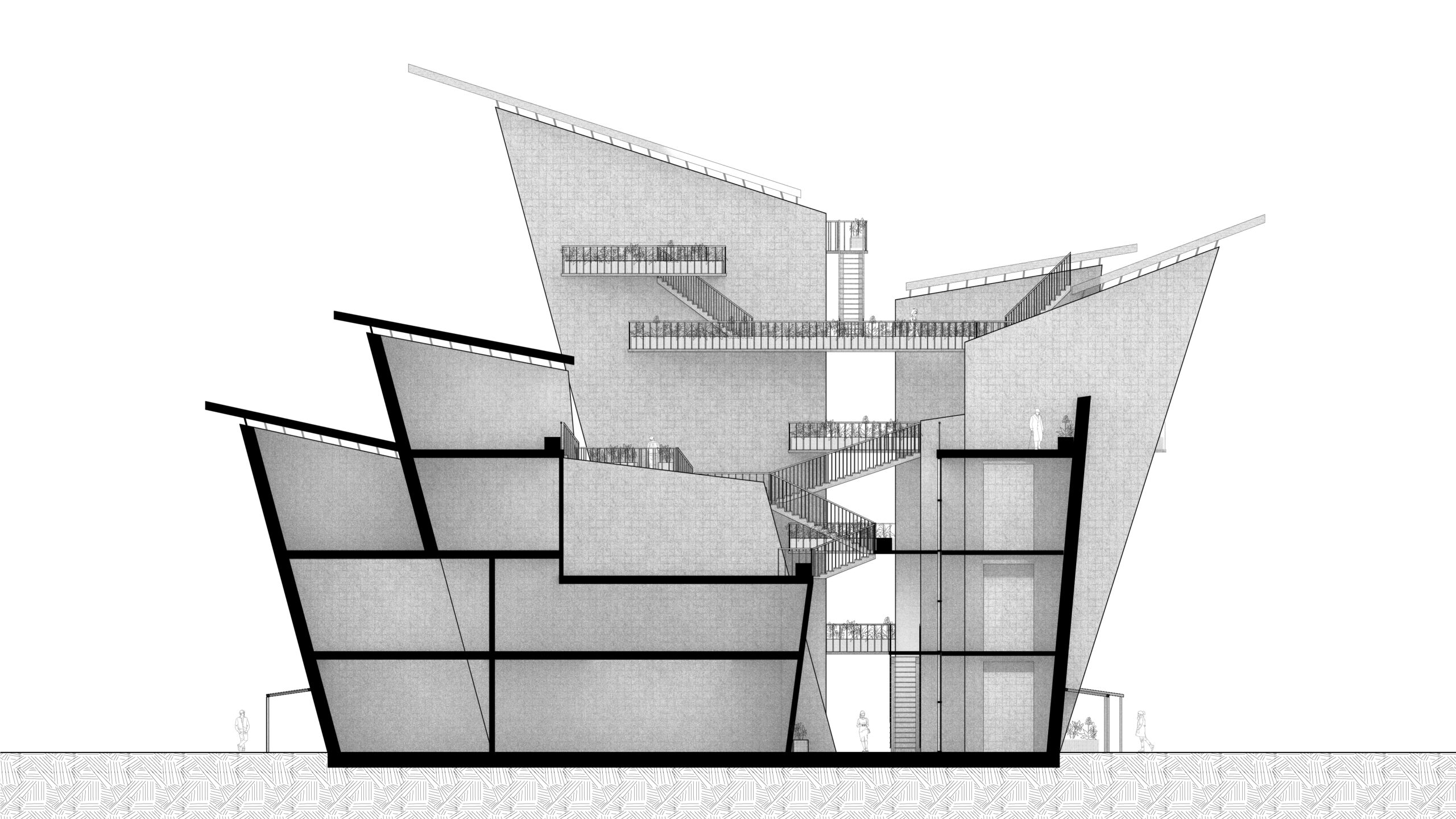
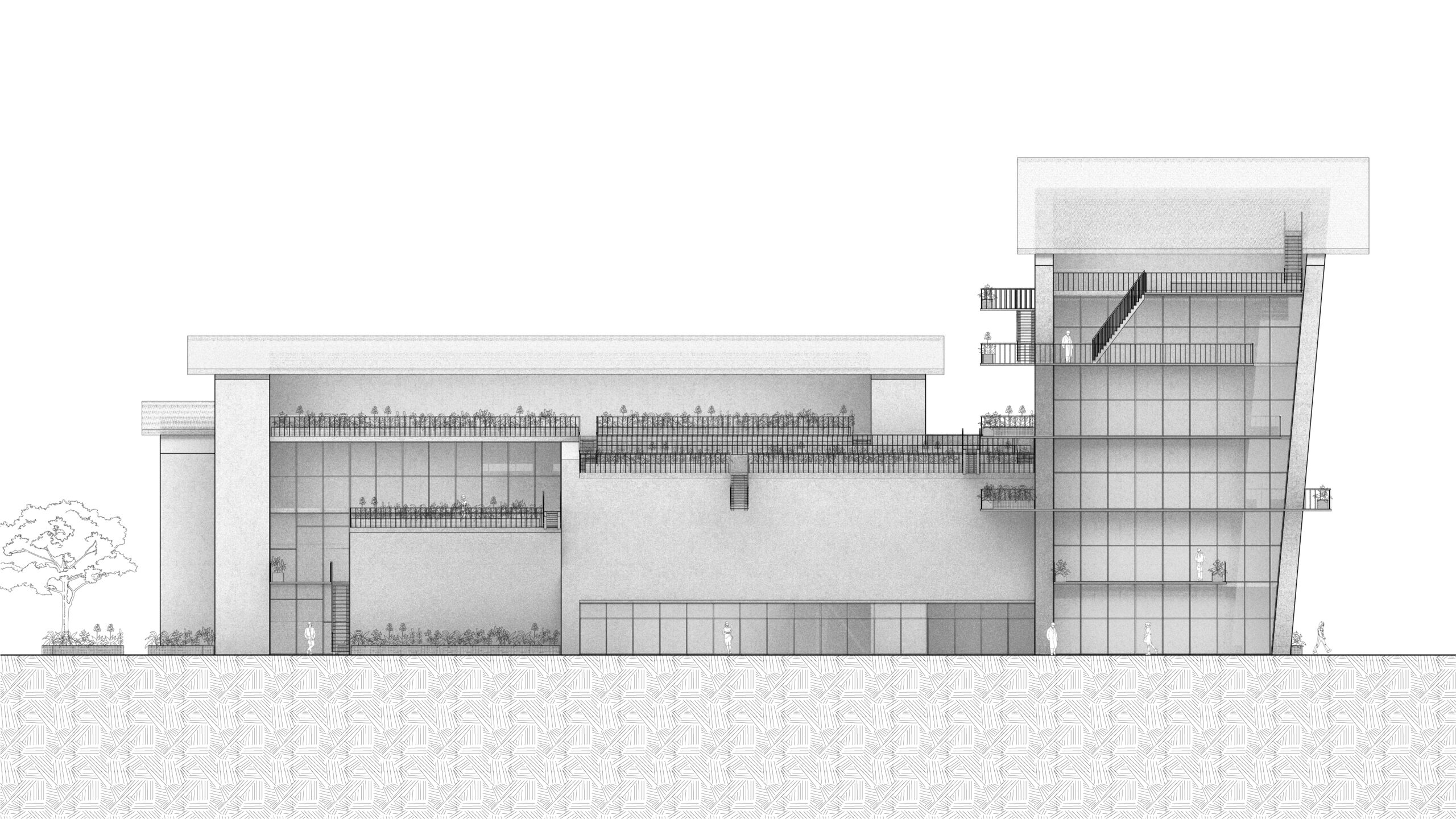
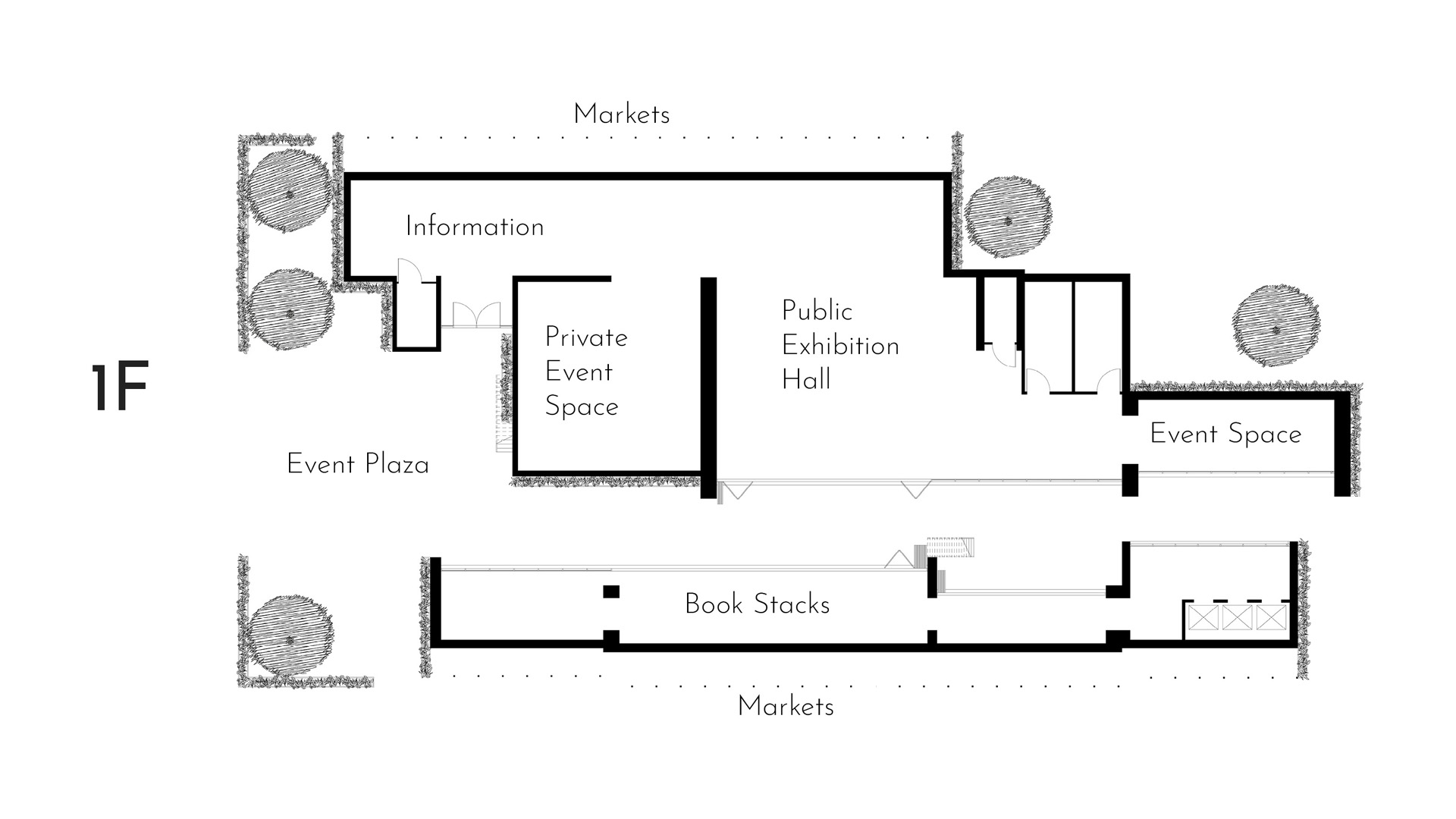
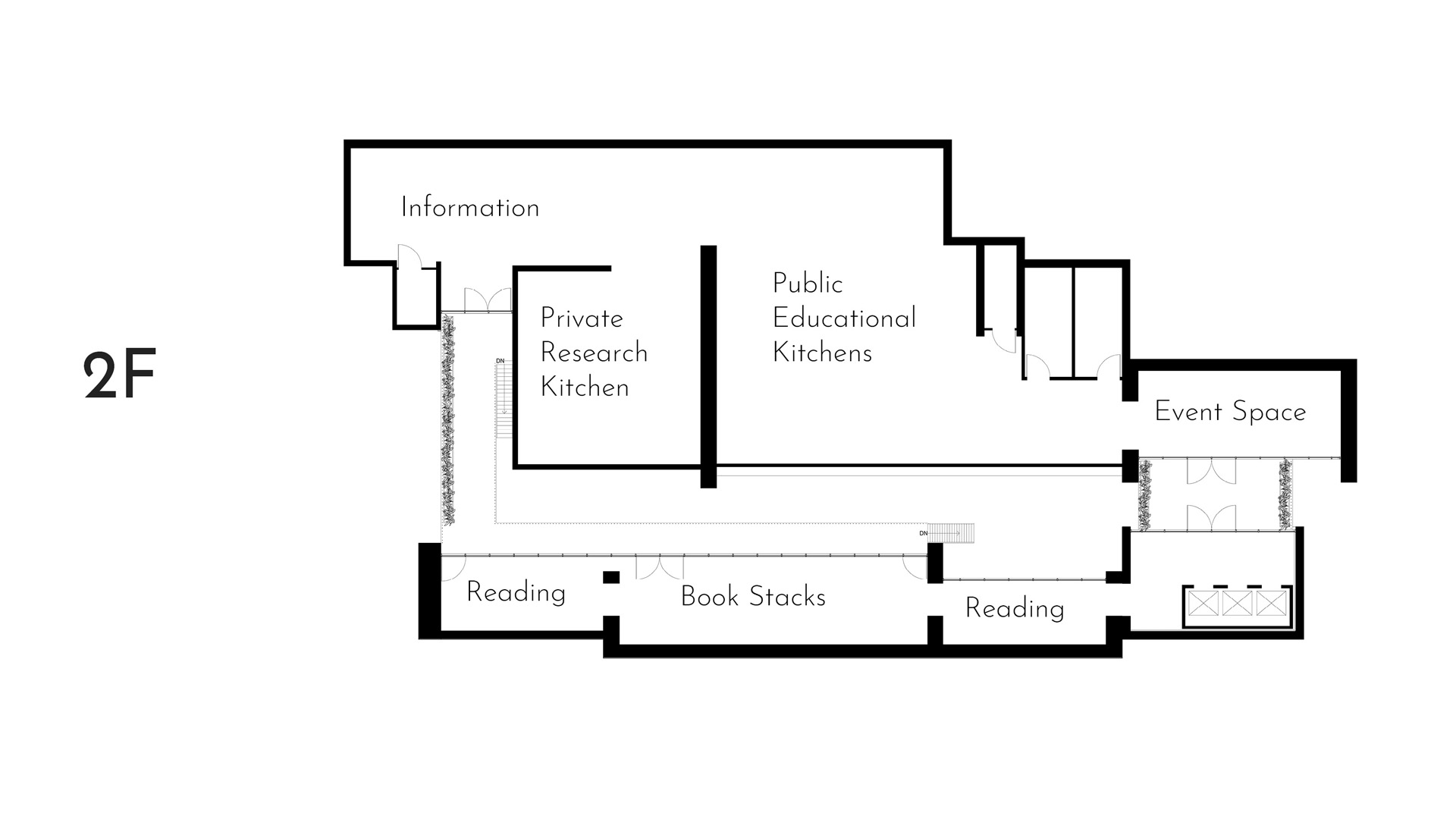
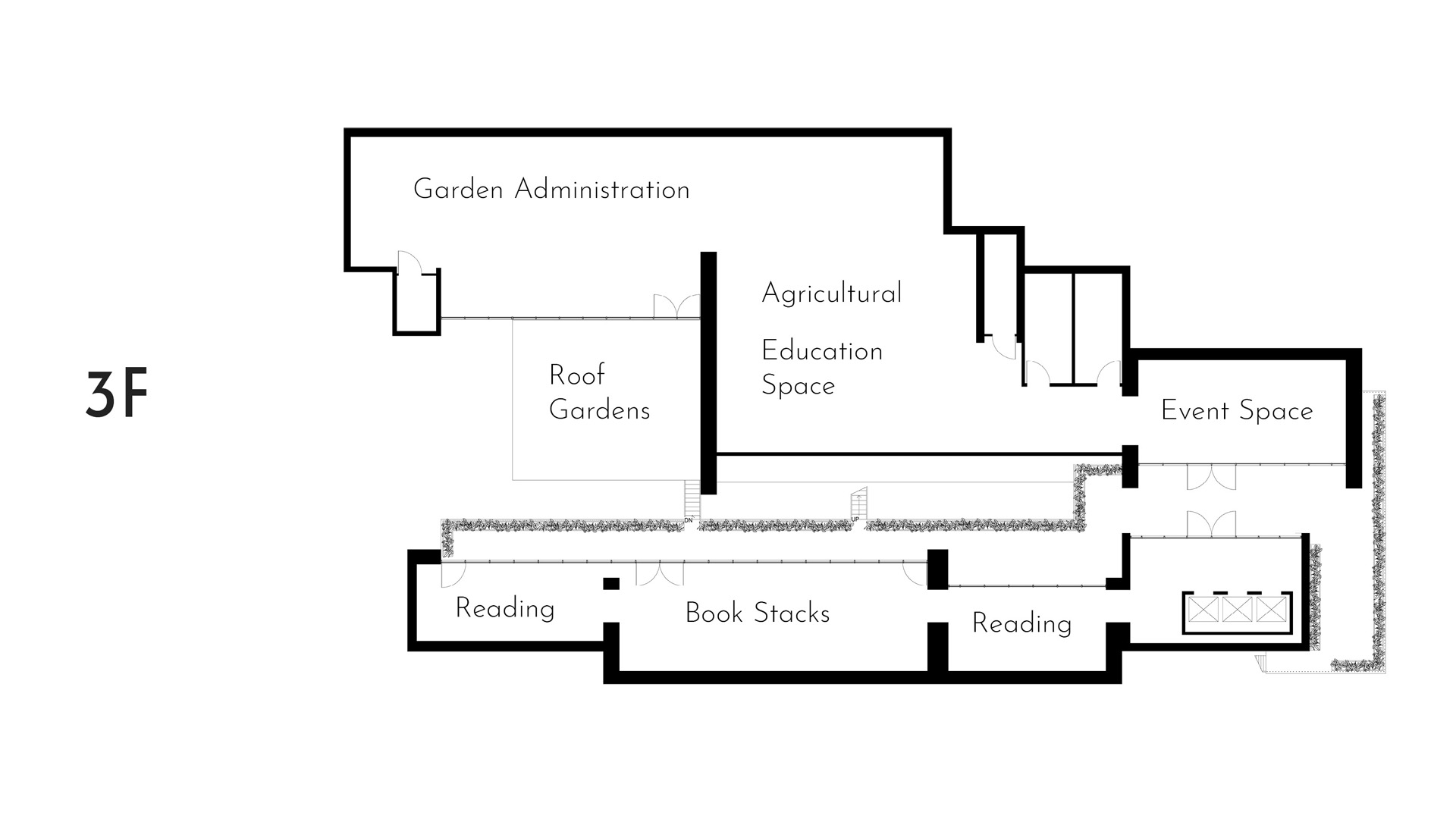
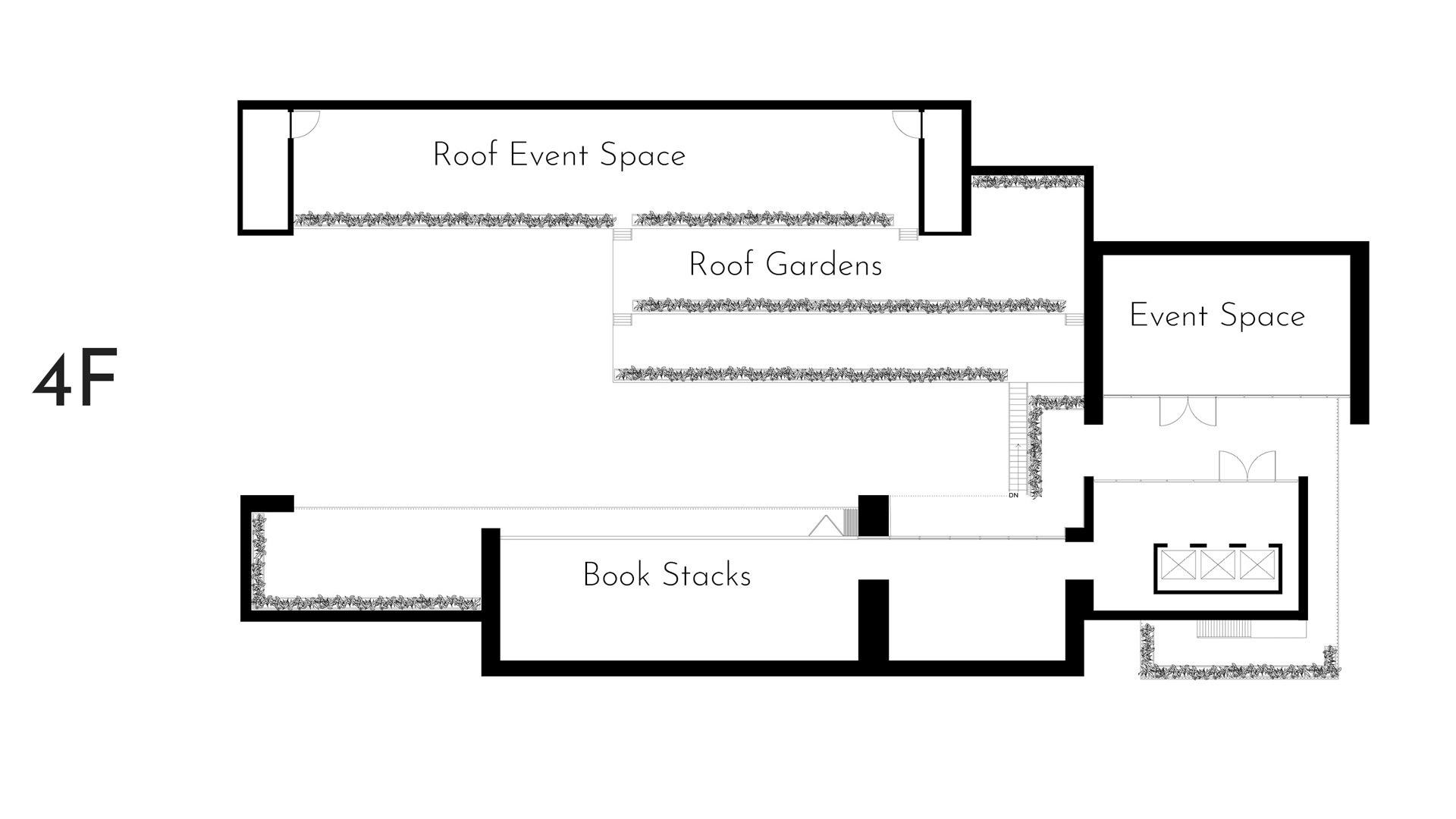
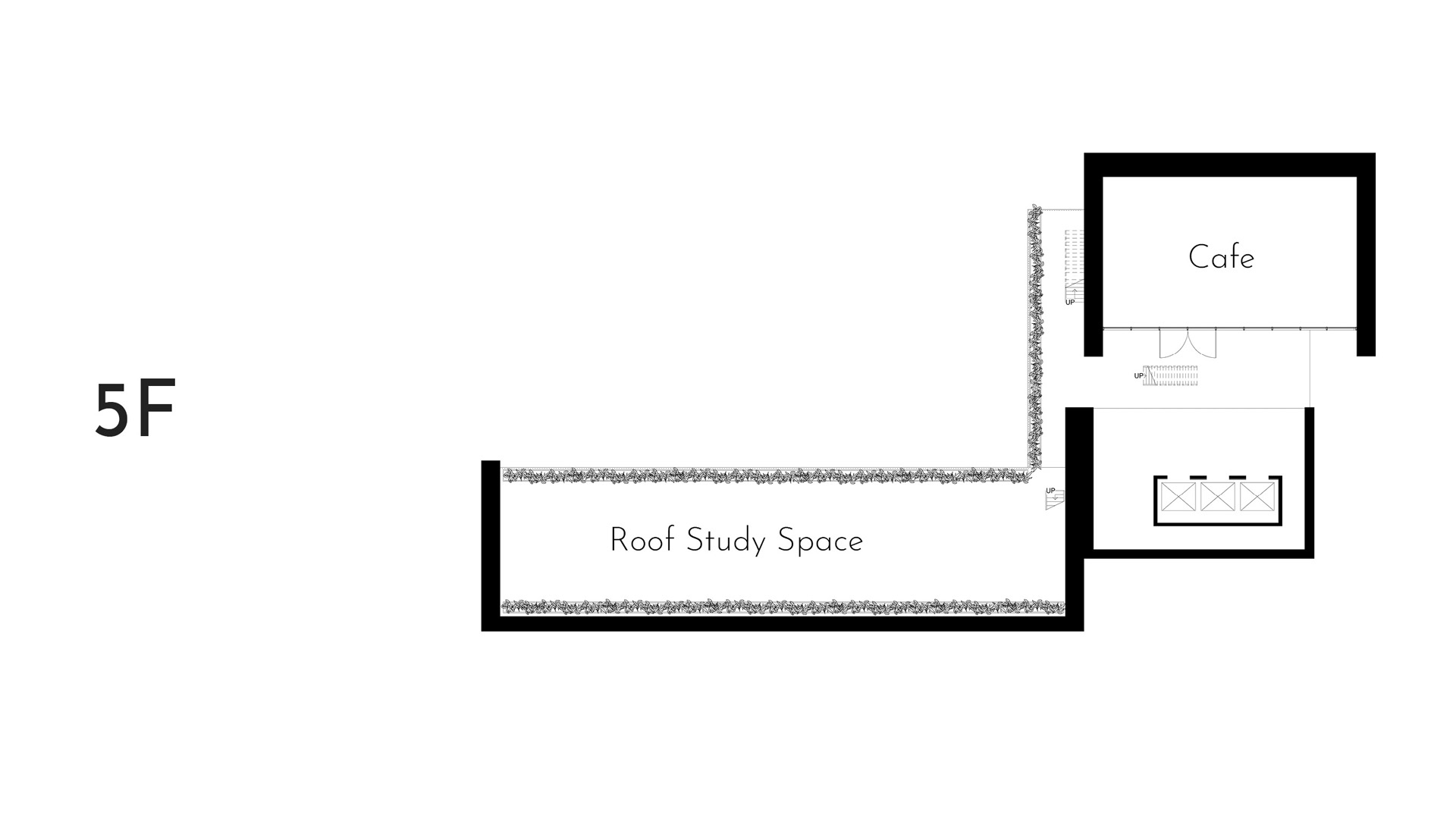
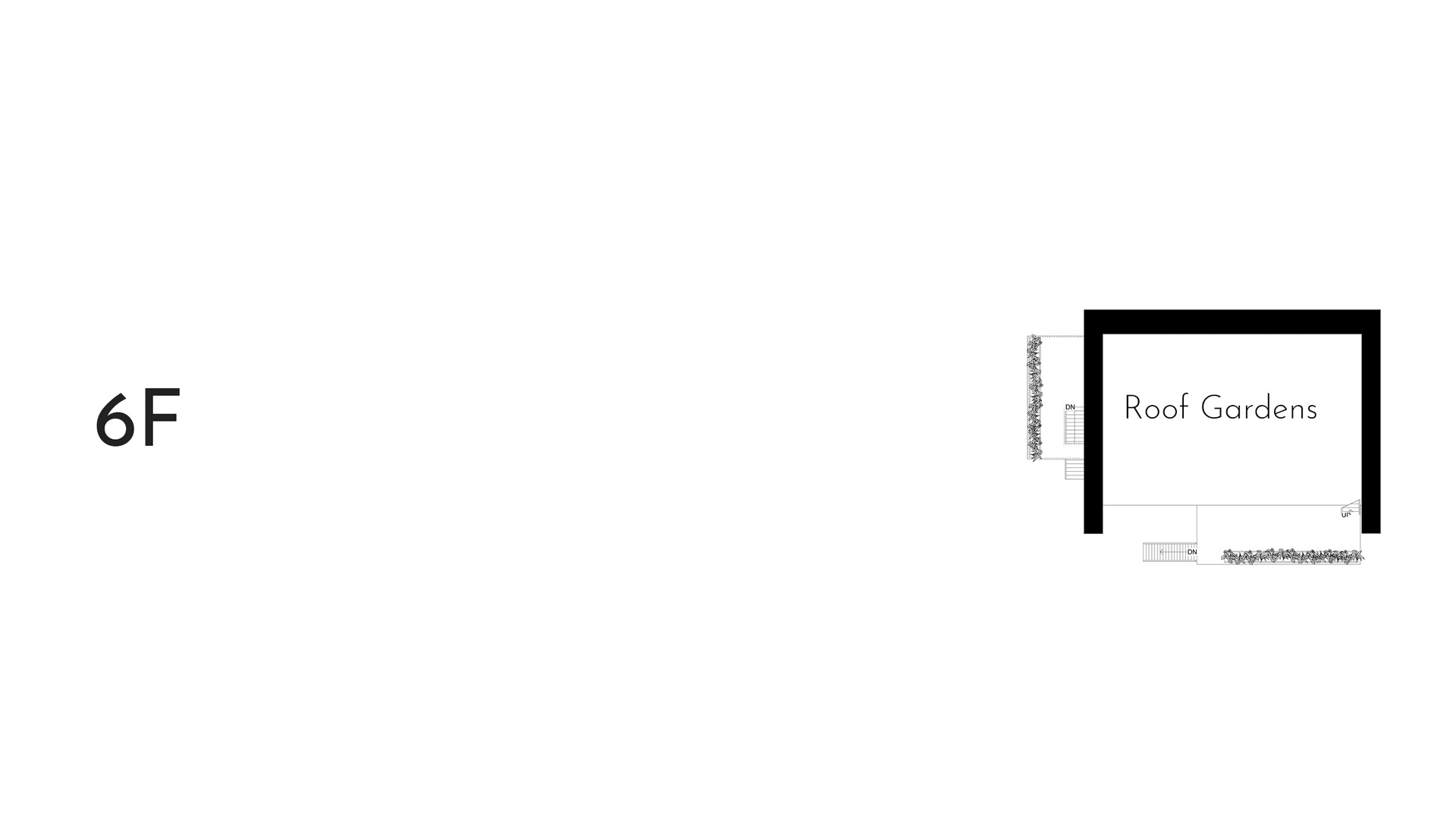
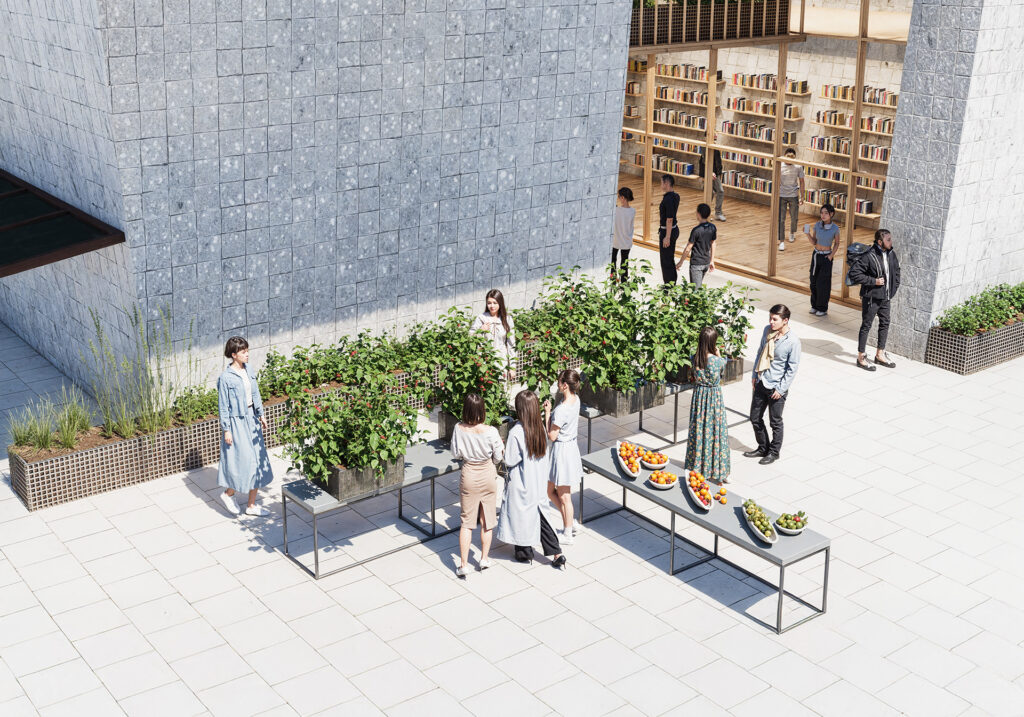
Market stalls extend around the site, maintaining the existing pattern of commercial activity. The building remains porous, functioning as a covered passage and maintaining the rhythm of the market.
Along the lower floors, more accessible spaces focus on public education and community interaction. Event halls and kitchens accommodate gardening workshops, cooking classes, and exhibitions.
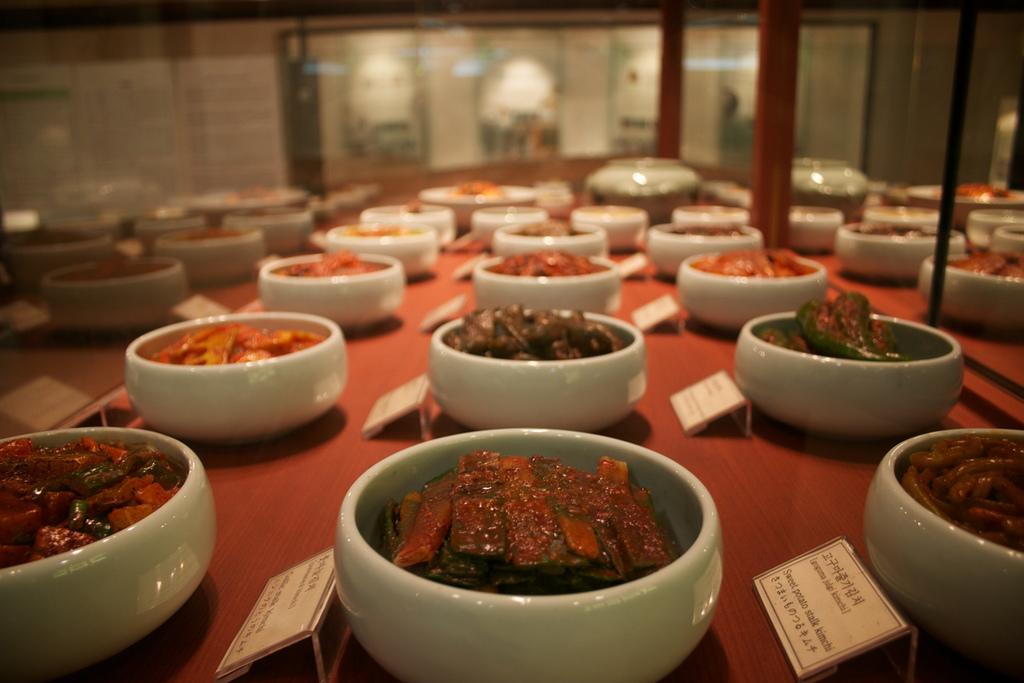
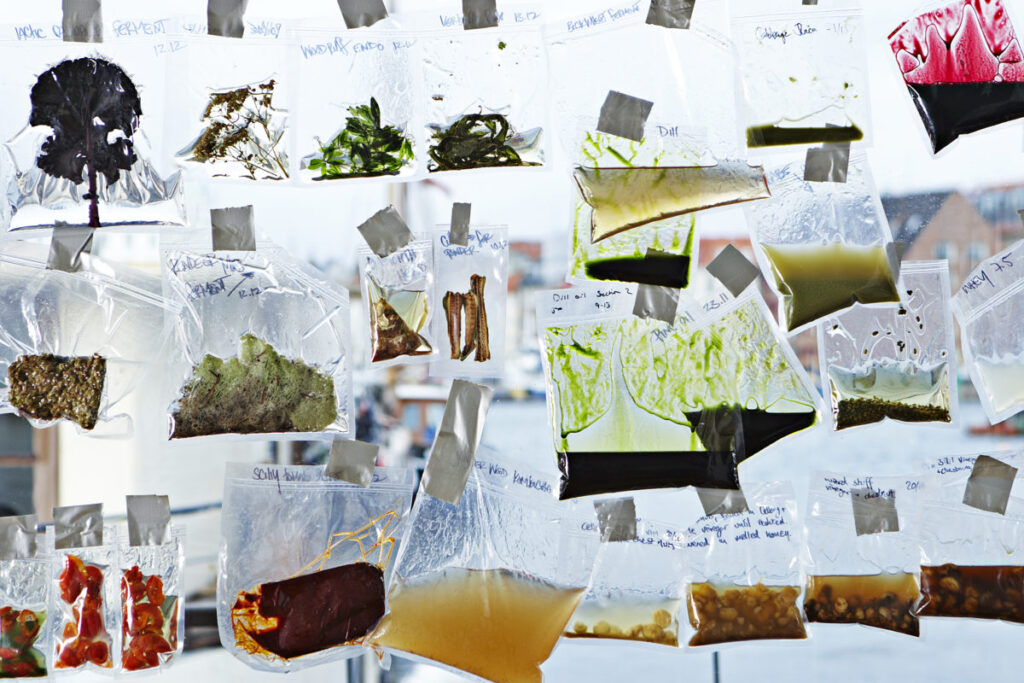
Archival spaces house documented market knowledge from recipes to cultivation records, while offices allow researchers to work in proximity to ongoing operations.
Public Education →
Exhibitions and Workshops
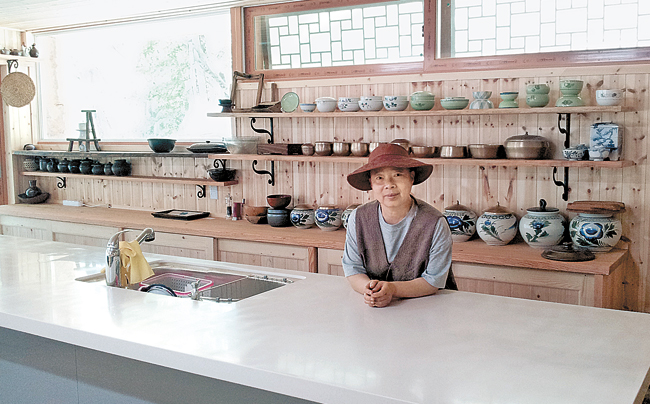
~ Community Interaction ~
← Expert Research
Experimentation and Documentation
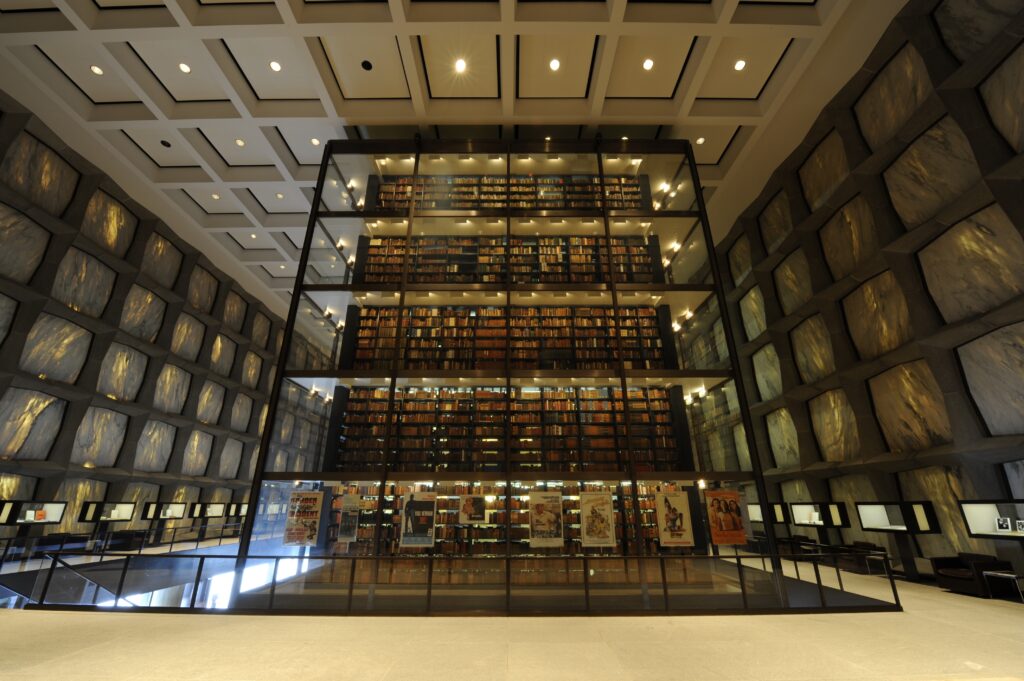
The project’s social agenda is to make market knowledge accessible without displacing its origins. Experienced vendors lead workshops in the teaching kitchens. University researchers collaborate with cultivators in the rooftop gardens. Weekend cooking classes connect families with traditional techniques. Visitors encounter Seoul’s food culture through direct participation rather than observation. The architecture supports these exchanges through graduated thresholds: from the open-air market passage, to semi-enclosed event spaces, to quieter upper reading areas. Each zone accommodates different scales of gathering while maintaining visual and physical connection across the building.
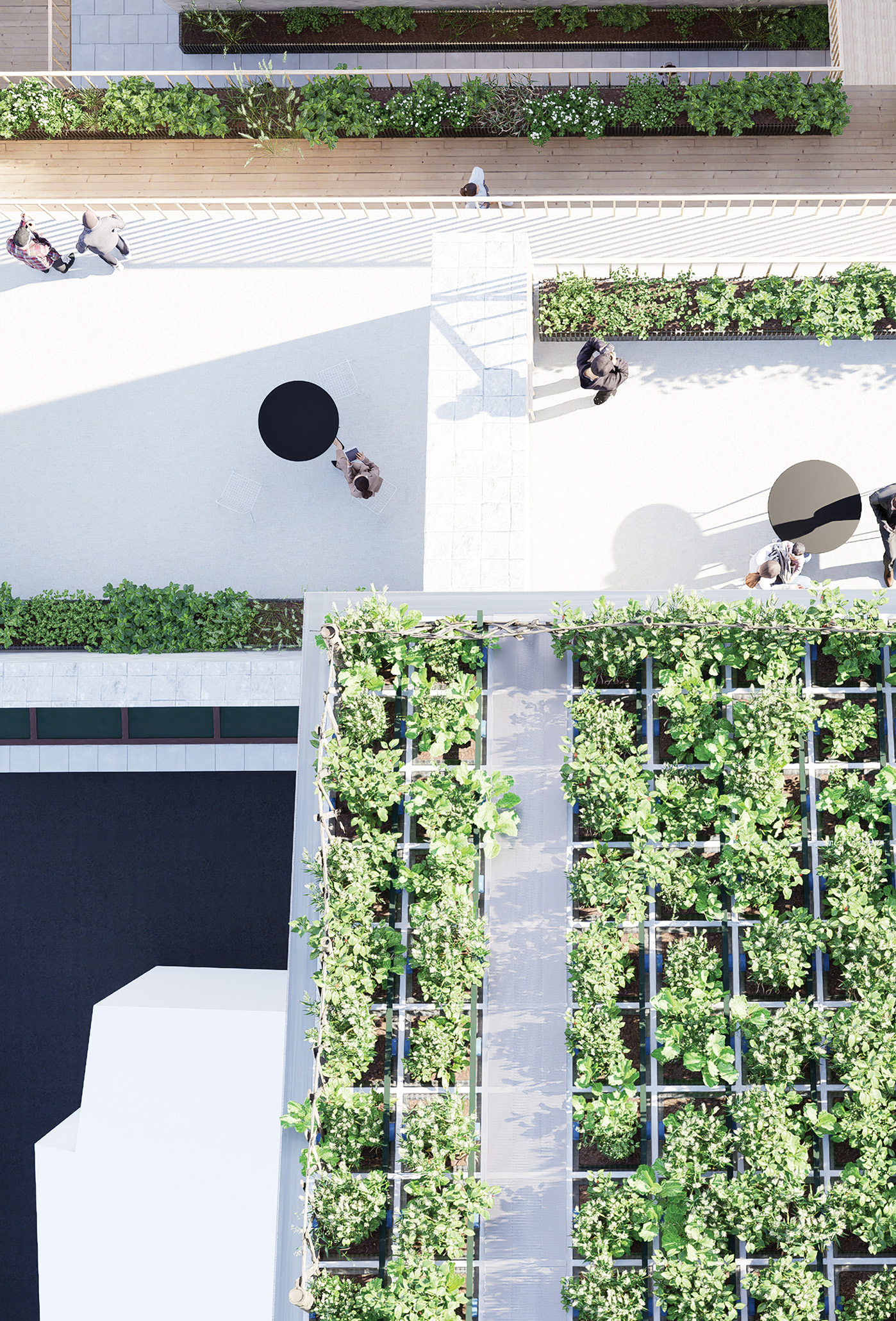
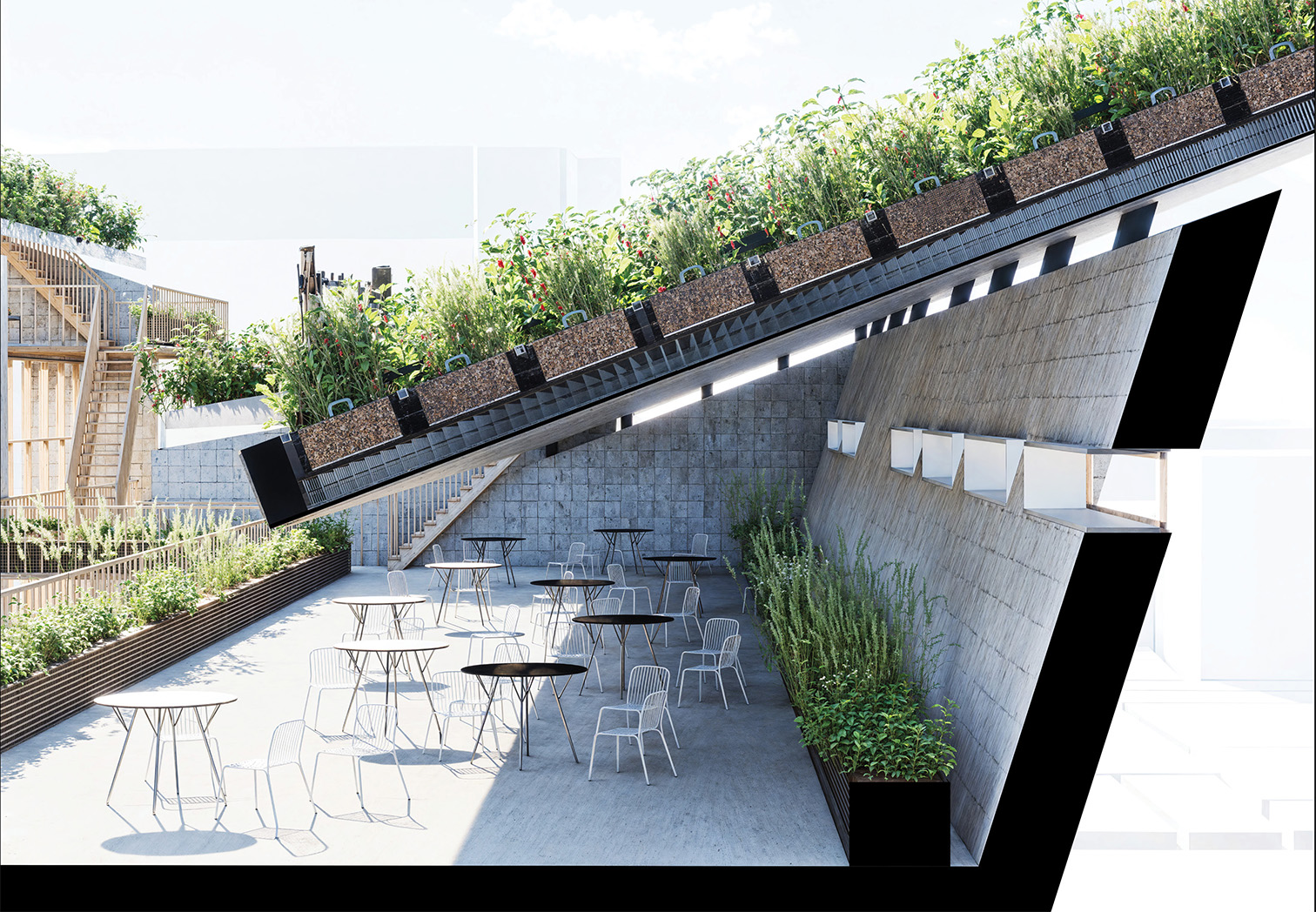
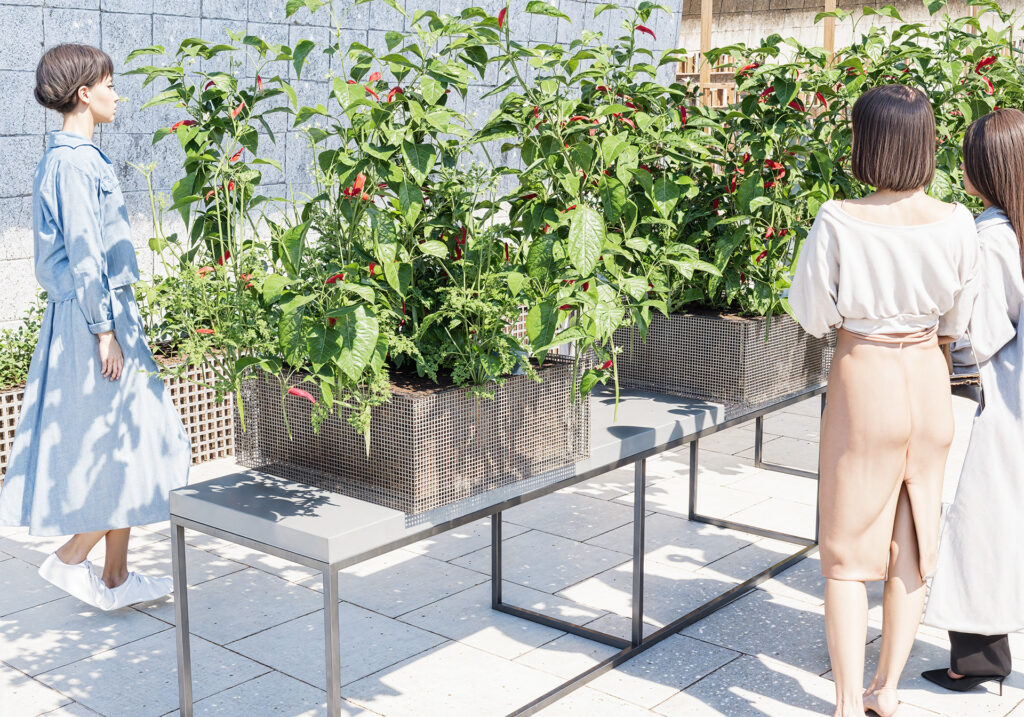
Roof terraces merge ecology, education, and leisure. Modular planting beds support urban agriculture programs where residents learn seasonal cultivation. These gardens provide thermal buffering, function as a public space in an otherwise dense commercial district, and provide a unique, interactive display for general audiences.
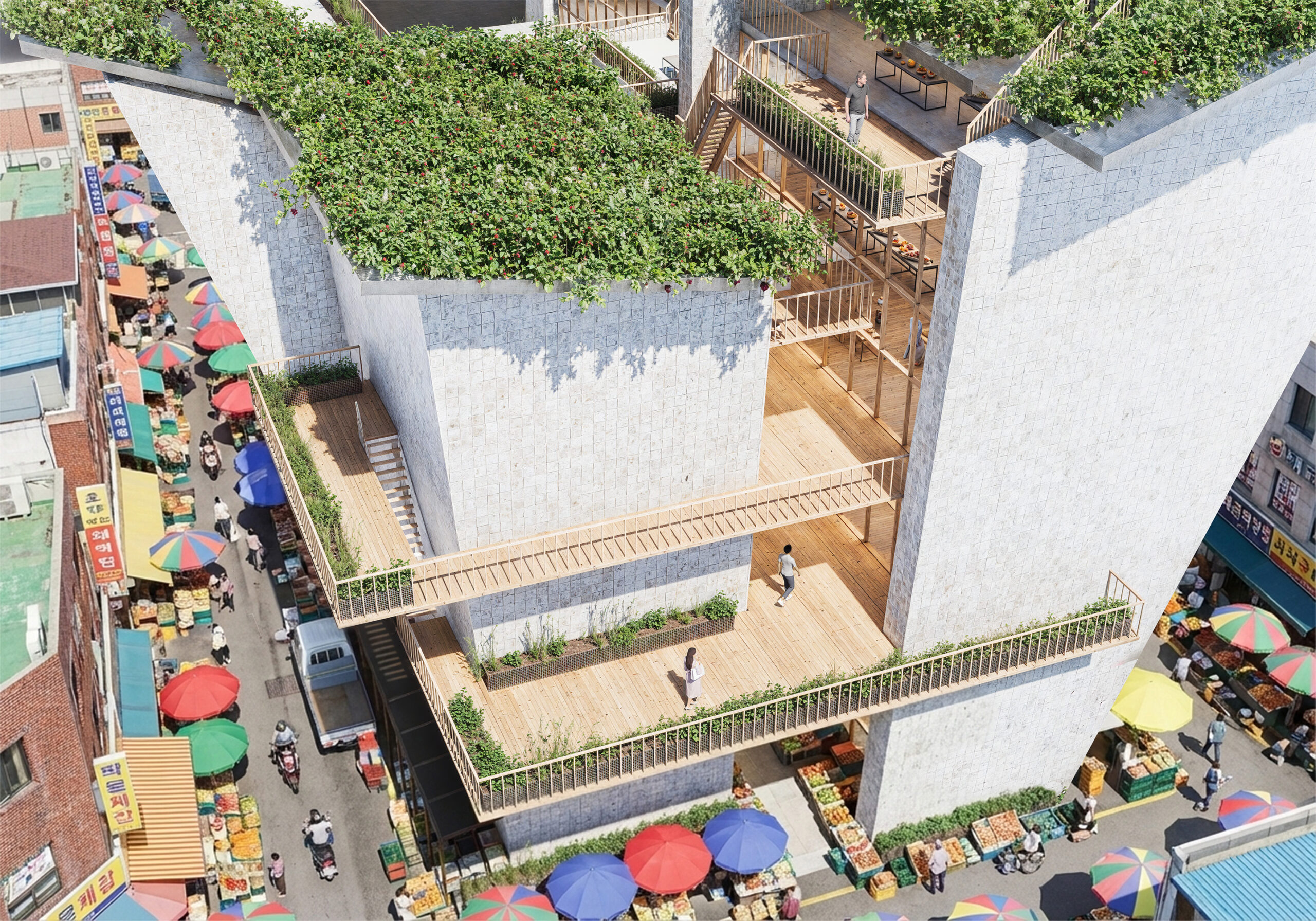
The Jegi-dong Fruit and Vegetable Library operates from the premise that preservation need not mean stasis. By treating the market as a living archive, the project proposes a model for how cities might sustain local expertise while accommodating change. The library does not replace the market; it provides institutional support for what the market already does. The market does not become museological; it gains an organizational framework that extends its relevance. Together, the market/library constitutes a civic hybrid: an institution where cultural practice, food systems, and knowledge production operate in mutual reinforcement. In a city rapidly eliminating its informal infrastructure, the project asks what might be preserved by building with that infrastructure rather than over it.